

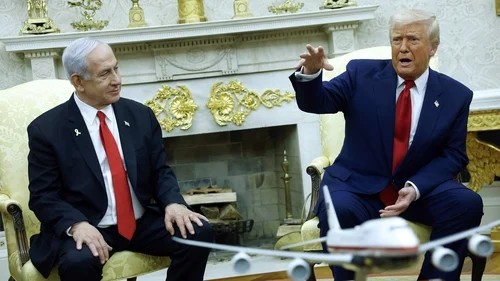
Israeli Prime Minister Benjamin Netanyahu is meeting with U.S. President Donald Trump at the White House on Tuesday for high-level talks expected to focus on the war in Gaza, efforts to secure a ceasefire and hostage release agreement, Iran’s regional activities, and broader Middle East security.
The meeting comes amid intensified diplomatic efforts by the United States to broker a lasting ceasefire between Israel and Hamas, following months of negotiations involving mediators from Qatar and Egypt. Officials say both leaders are expected to review the status of the talks and discuss ways to secure the release of the remaining hostages held in Gaza.
Another major item on the agenda is Iran, with Washington and Jerusalem expected to coordinate their approach following recent military tensions in the region. The leaders are also expected to discuss measures aimed at preventing Tehran from expanding its regional influence and rebuilding its military capabilities after recent confrontations.
The White House said the discussions would also cover humanitarian assistance for civilians in Gaza, regional stability, and continued U.S. security support for Israel. Administration officials have reiterated Washington’s commitment to Israel’s security while urging progress toward a diplomatic resolution to the conflict.
For Netanyahu, the visit represents another opportunity to reinforce strategic ties with Israel’s closest ally as his government faces mounting international pressure over the humanitarian situation in Gaza and renewed calls for a permanent ceasefire.
Trump, meanwhile, is expected to use the meeting to reaffirm U.S. support for Israel while emphasizing his administration’s push for an agreement that would end hostilities, secure the release of hostages and improve humanitarian access to Gaza.
The outcome of the talks is likely to shape the next phase of U.S. diplomacy in the Middle East, with officials from both countries expected to continue consultations in the coming weeks on security cooperation, reconstruction efforts and the broader regional landscape.