
The Democratic Republic of Congo’s outbreak of Bundibugyo strain Ebola has become the fastest-growing Ebola outbreak ever recorded in Africa, with the death toll approaching 1,000 as health authorities warn that the epidemic is outpacing containment efforts.
Official figures released on Tuesday showed 2,473 confirmed cases and 999 deaths since the outbreak was declared on May 15, surpassing the pace of previous Ebola epidemics, including the devastating 2014-2016 West Africa outbreak, which took about eight months to reach the same number of fatalities. (AP News)
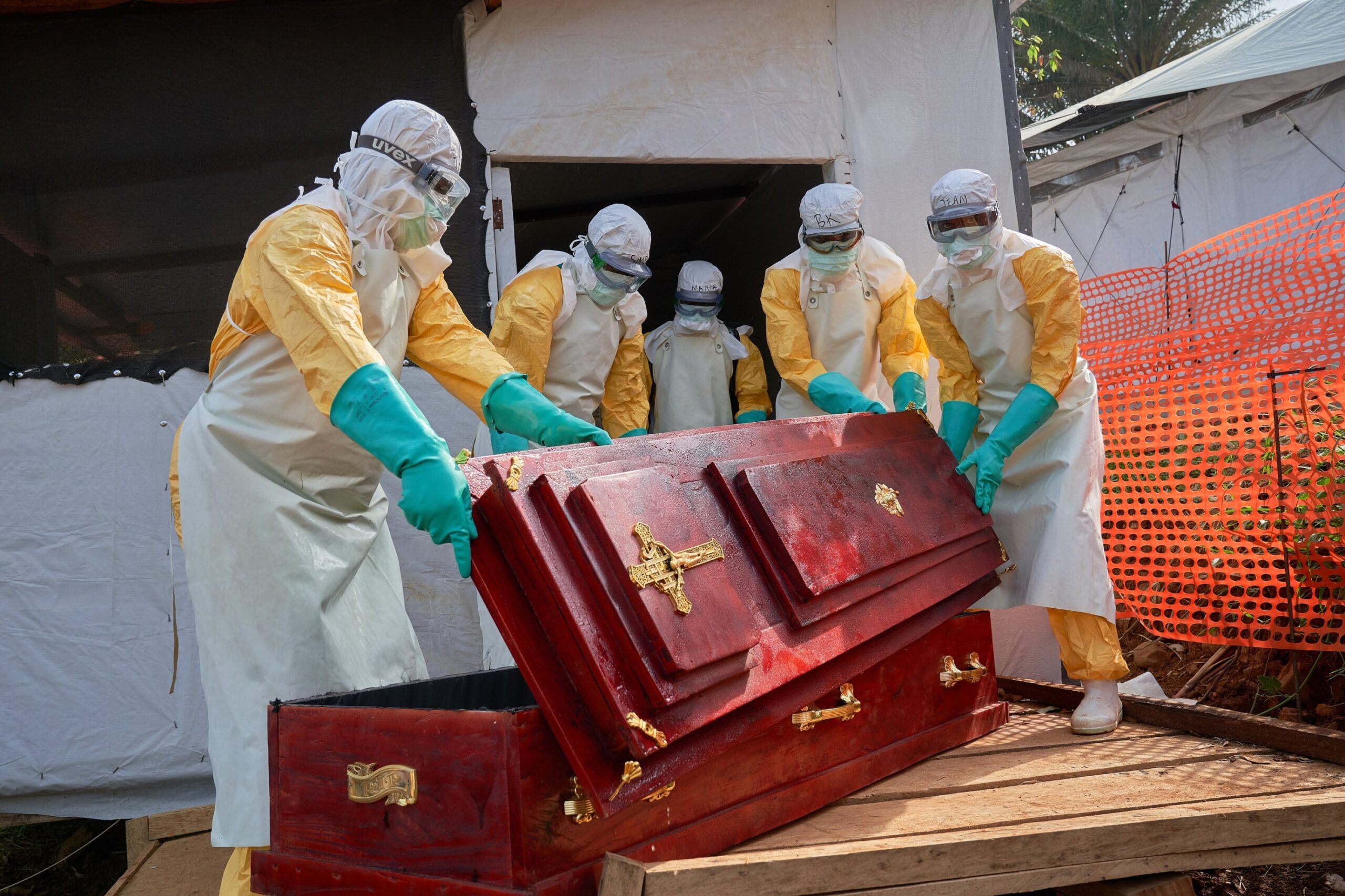
The outbreak is being driven by the Bundibugyo ebolavirus, a relatively rare species of Ebola for which no licensed vaccine or approved treatment currently exists, complicating efforts to halt transmission. While experimental vaccines and therapies are under evaluation, health workers continue to rely primarily on early detection, isolation, supportive care and contact tracing. (World Health Organization)
Health officials say one of the most alarming aspects of the outbreak is that around 80% of newly identified infections cannot be linked to known chains of transmission, indicating widespread undetected community spread and making contact tracing increasingly difficult. (AP News)
The epidemic remains concentrated in eastern DRC, particularly Ituri Province, but has spread across five provinces and dozens of health zones. According to the World Health Organization, the outbreak remains active in 38 health zones, with continued transmission fueled by insecurity, population movement and delayed detection of cases. (World Health Organization)
The response has also been hampered by violence and logistical challenges. Armed conflict in parts of eastern Congo has restricted access to affected communities, while attacks on health facilities, community mistrust and strikes by unpaid healthcare workers have disrupted surveillance and treatment operations. (AP News)
Although neighboring Uganda has successfully contained imported cases and is in the WHO’s 42-day surveillance period after discharging its last Ebola patient, international health agencies continue to warn of a high regional risk because of extensive cross-border movement. Isolated travel-related cases have also been reported in Europe following the medical evacuation of infected humanitarian workers. (The Guardian)
Africa CDC Director-General Dr. Jean Kaseya has appealed for greater international support, warning that the outbreak could become one of the worst Ebola epidemics ever documented unless surveillance, laboratory capacity and treatment efforts are rapidly expanded. The agency estimates that billions of dollars in additional resources will be needed to fully contain the crisis. (The Sun)
The World Health Organization and Africa CDC continue to coordinate the response alongside the Congolese government, including expanded laboratory testing, cross-border surveillance and clinical trials aimed at identifying effective vaccines and treatments for the Bundibugyo strain. Officials stress that containing transmission now will be critical to preventing the outbreak from becoming the deadliest Ebola epidemic since the virus was first identified nearly five decades ago. (World Health Organization)