
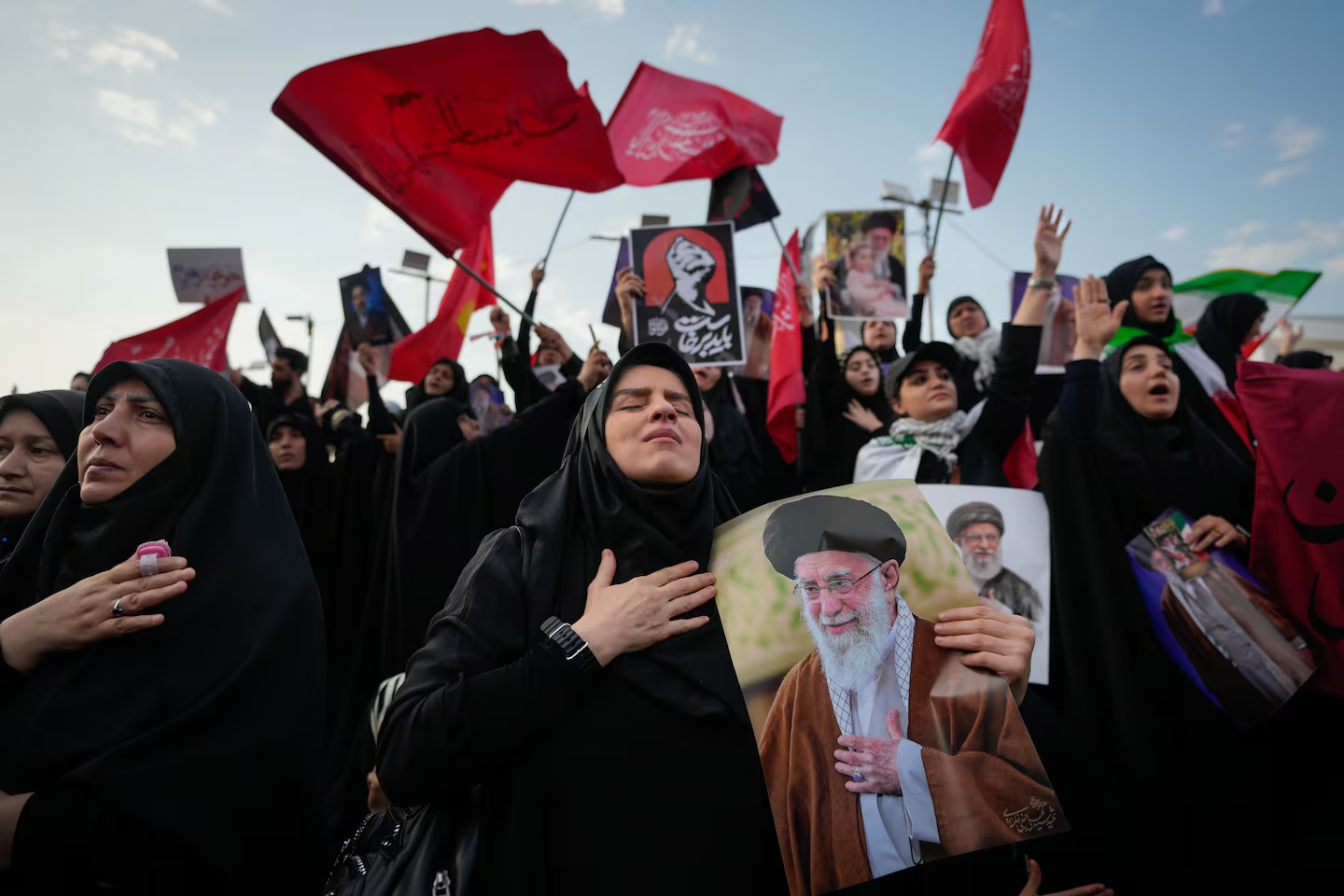
Iran has begun a 12-hour funeral procession through the streets of Tehran for slain Supreme Leader Ayatollah Ali Khamenei, drawing massive crowds of mourners in one of the country’s largest public ceremonies in decades.
The procession, which started in central Tehran, is taking Khamenei’s flag-draped coffin through the capital before it is transported to Mehrabad International Airport for the next stage of the funeral rites. The ceremony is part of a multi-day national mourning period following the leader’s death in a February airstrike that Iranian authorities blame on Israel and the United States.
Thousands of mourners, many dressed in black, lined the procession route carrying Iranian flags, portraits of Khamenei, and religious banners. State television broadcast aerial images showing large crowds stretching for several kilometres as people gathered to pay their final respects.
Senior government officials, military commanders, and religious leaders attended the ceremony, describing Khamenei as a symbol of Iran’s Islamic Revolution and national sovereignty. The government has declared days of national mourning, while heightened security remains in place across the capital.
The funeral has also become a show of national unity, with many mourners chanting slogans condemning Israel and the United States and calling for retaliation over the assassination. Iranian leaders have vowed that Khamenei’s death will not weaken the country’s resolve or alter its regional policies.
Following the Tehran procession, Khamenei’s body is expected to continue on a series of commemorative events before his final burial in Mashhad, his hometown and the site of the revered Imam Reza shrine. Authorities have mobilized thousands of security personnel and emergency workers to manage the crowds throughout the ceremonies.
The funeral comes at a sensitive time for Iran as the country navigates heightened regional tensions, leadership transition, and ongoing diplomatic uncertainty following months of conflict. Analysts say the ceremonies are being closely watched both domestically and internationally for what they may signal about Iran’s political direction under its new leadership.