

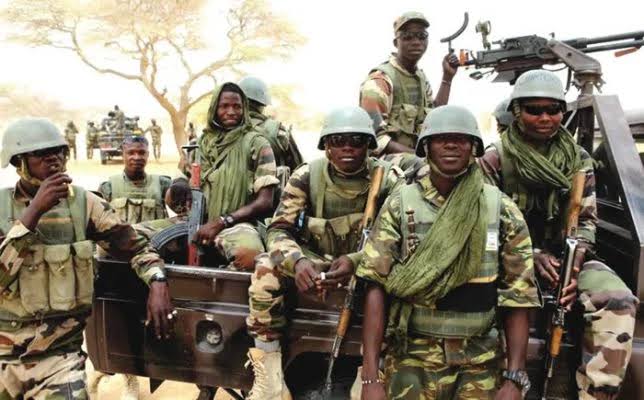
The fight against insurgency in Nigeria’s North-East recorded a significant development as several senior commanders of the Islamic State West Africa Province (ISWAP) and 76 of the group’s fighters surrendered to security forces under the Federal Government’s ongoing counterterrorism operations.
Military authorities said the surrender took place following sustained offensives by troops, coupled with intensified air and ground operations that have continued to weaken insurgent strongholds across the region. The defectors reportedly laid down their arms and voluntarily presented themselves to troops operating in parts of Borno State.
According to military officials, the surrendered group includes high-ranking ISWAP commanders, fighters, and members of their families. The development is being viewed as another setback for the terrorist group, which has faced increasing pressure from coordinated operations by the Nigerian Armed Forces and other security agencies.
The military attributed the latest wave of surrenders to the success of ongoing operations aimed at dismantling terrorist camps, disrupting supply routes, and encouraging insurgents to abandon violence through non-kinetic initiatives. Officials said those who surrendered would undergo profiling, screening, and rehabilitation in line with established government procedures.
Security experts say the surrender of senior commanders could provide valuable intelligence on ISWAP’s structure, recruitment methods, logistics, and future operational plans. Such information may assist security agencies in targeting remaining insurgent cells and preventing future attacks.
While welcoming the development, analysts cautioned that the insurgency has not been completely defeated. They stressed the need for sustained military operations, improved intelligence gathering, and continued investment in reconstruction and community resilience across the North-East.
Residents of communities affected by years of insurgency have expressed cautious optimism, hoping the latest defections will contribute to improved security and allow displaced families to return home safely. Humanitarian organizations have also emphasized the importance of supporting rehabilitation and reintegration efforts while ensuring justice for victims of terrorism.
The Federal Government has repeatedly maintained that military pressure, alongside deradicalization and rehabilitation programmes, remains central to its strategy for ending insurgency in the region. Authorities say efforts will continue until all terrorist groups operating in Nigeria are dismantled.
As security operations intensify, the surrender of top ISWAP commanders and dozens of fighters is being seen as a significant boost to Nigeria’s counterinsurgency campaign. The coming months will be critical in determining whether the momentum can be sustained toward achieving lasting peace and stability in the North-East.