

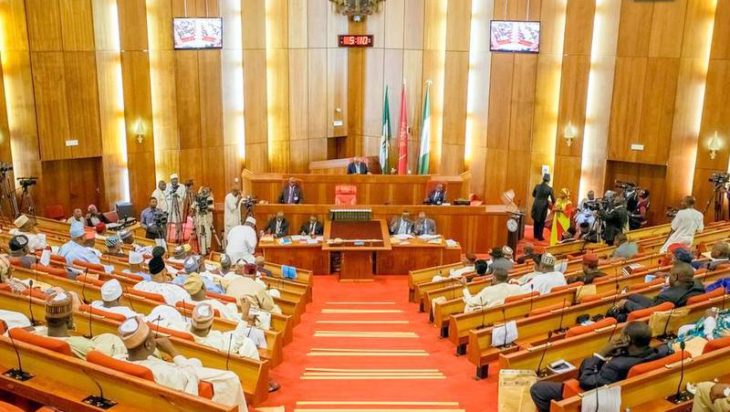
Nigeria’s Senate is set to vote today on a landmark State Police Bill backed by President Bola Ahmed Tinubu’s administration, a proposal that could significantly reshape the country’s security architecture.
The legislation seeks to amend existing constitutional provisions to allow individual states to establish and operate their own police services alongside the Nigeria Police Force. Supporters argue that the reform is necessary to address rising insecurity, improve local intelligence gathering, and enable faster responses to crime and communal conflicts.
The debate over state policing has intensified in recent years as governors, traditional rulers, security experts, and civil society groups have called for a more decentralized approach to law enforcement. Advocates contend that state governments are often better positioned to understand local security challenges and deploy resources accordingly.
President Tinubu has repeatedly expressed support for state police as part of broader efforts to strengthen national security and improve governance. Administration officials believe the reform would enhance coordination between federal and state authorities while reducing pressure on the overstretched national police force.
However, the proposal remains controversial. Critics have raised concerns that state police agencies could be abused by political leaders to intimidate opponents, influence elections, or suppress dissent. Others worry about disparities in funding and operational capacity between wealthier and less-developed states.
Ahead of the vote, senators engaged in extensive deliberations over safeguards designed to ensure accountability, professionalism, and respect for human rights. Proposed provisions include independent oversight mechanisms, clearly defined operational limits, and federal guidelines governing recruitment and training.
Political analysts describe today’s vote as one of the most consequential security-related decisions before the National Assembly in recent years. If approved, the bill would represent a major constitutional shift and could fundamentally alter how policing is conducted across Nigeria.
State governors have largely welcomed the initiative, arguing that local police services would complement existing security structures and help tackle crimes such as kidnapping, banditry, and armed robbery. Several regional security outfits already operating across the country are viewed as evidence of growing demand for decentralized security solutions.
The outcome of the Senate vote will be closely watched by citizens, security stakeholders, and international observers. Should the legislation pass, further constitutional procedures and implementation frameworks would be required before state police forces could become operational.
As lawmakers prepare to cast their votes, many Nigerians see the bill as a critical test of the country’s willingness to pursue far-reaching reforms aimed at addressing persistent security challenges and improving public safety nationwide.