

Guided-missile destroyers, 15,000 troops, and over 100 aircraft deployed as Iran vows
to respond ‘with full strength’ to Monday’s operation.
The United States is launching one of its most ambitious naval operations since the start of
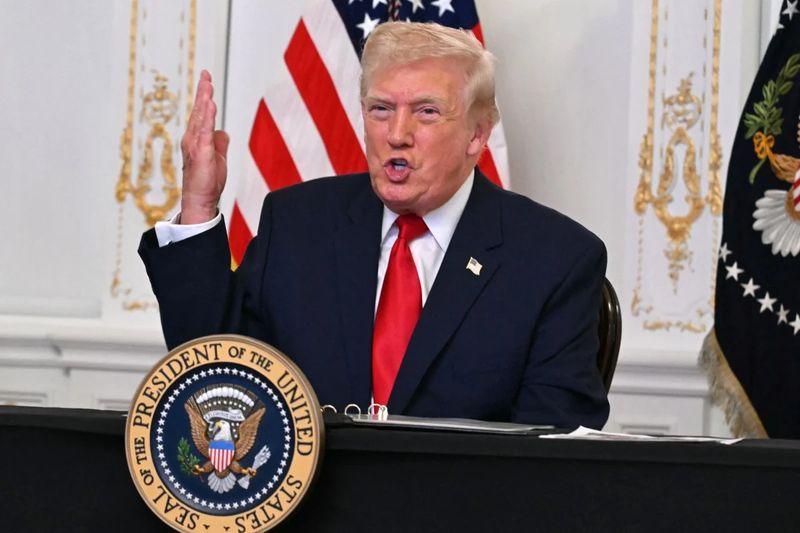
the Iran conflict today, with President Donald Trump announcing “Project Freedom” — a
military-backed effort to guide hundreds of trapped commercial ships through the Strait of
Hormuz.
The operation, which goes live on Monday, May 4, marks a dramatic escalation in the 65-
day-old conflict between the United States and Iran. It also signals Washington’s
determination to restore global shipping through one of the world’s most critical oil
chokepoints, even as fragile peace negotiations continue behind the scenes.
“The Ship movement is merely meant to free up people, companies, and Countries that
have done absolutely nothing wrong — They are victims of circumstance,” Trump wrote on
Truth Social late Sunday. He added a stark warning: “If, in any way, this Humanitarian
process is interfered with, that interference will, unfortunately, have to be dealt with
forcefully.”
US Central Command confirmed the scale of the operation in a statement early Monday.
The deployment includes guided-missile destroyers, more than 100 land and sea-based
aircraft, multi-domain unmanned platforms, and approximately 15,000 service members
committed to securing the strait. Shipping executives have expressed cautious optimism but
also deep anxiety about potential confrontation.
Iran’s response was swift and defiant. Ali Abdollahi, commander of Iran’s Khatam al-Anbiya
Central Headquarters, declared that Iran would protect the security of the strait “with full
strength.” Tehran views the strait as part of its sovereign strategic space and has long
warned that any unilateral military action in the waterway would be treated as an act of
aggression.
The timing of Project Freedom is loaded with diplomatic tension. Just hours before the
announcement, Iranian Foreign Ministry spokesperson Esmaeil Baghaei confirmed that
Tehran had received Washington’s response to Iran’s 14-point peace proposal, transmitted
via Pakistan. That proposal includes sweeping demands: withdrawal of US forces from the
region, lifting of sanctions, release of frozen Iranian assets, compensation payments, and
an end to hostilities across all fronts including Lebanon.
The core sticking point remains Iran’s nuclear program. Washington insists Tehran must
accept stringent restrictions on its stockpile of over 400 kilograms of highly enriched
uranium before any ceasefire can be finalized. Iran wants nuclear discussions deferred to a
later phase — a non-starter for the US.
Meanwhile, the economic toll of the conflict continues to mount. US gas prices have surged
to a national average of $4.45 per gallon, up nearly 50 percent since hostilities began.
Global oil markets have been roiled by the disruption to Gulf shipping, with the Strait of
Hormuz normally handling roughly 20 percent of the world’s oil supply.
Project Freedom is being framed by the White House as a humanitarian operation, but
analysts say it is as much about projecting American military power as it is about rescuing
trapped vessels. If Iran attempts to interfere, the consequences could be catastrophic — not
just for the region, but for global energy markets already stretched to the brink.
The world is watching the strait today. What happens in the next 24 hours could define
whether this conflict inches toward a negotiated peace — or spirals into something far
worse.