

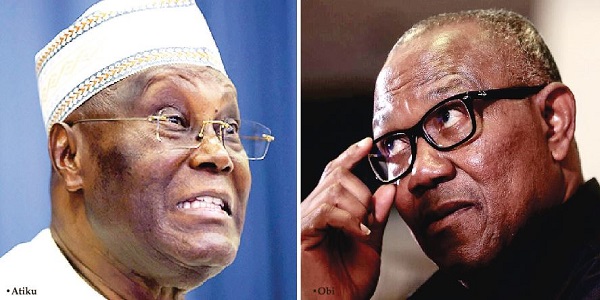
A seismic political realignment is underway as Peter Obi and Rabiu Kwankwaso formalize their alliance, putting Atiku Abubakar’s presidential ambitions in jeopardy.
Former Vice President Atiku Abubakar is facing the most serious challenge to his 2027 presidential ambitions as the joint ticket movement between former Anambra Governor Peter Obi and former Kano Governor Rabiu Kwankwaso gains unprecedented momentum within the African Democratic Congress (ADC).
Reports emerging this Sunday indicate that a committee set up by the Obi and Kwankwaso camps is working to formalize a one-term agreement that would see Obi serve as the presidential candidate with Kwankwaso as his running mate. Under the arrangement, Obi would serve a single term, clearing the path for Kwankwaso to pursue the presidency in 2031.
The ‘OK Movement’ — a grassroots support base for the Obi-Kwankwaso ticket — was officially inaugurated on April 20 and has since been conducting intensive consultations with northern political leaders. Sources close to both camps confirm that the two men have reached a working agreement and are now focused on consolidating support ahead of the ADC primary election.
This development has sent shockwaves through Nigeria’s opposition landscape. Atiku, who has run for president multiple times and has long been considered the leading opposition figure, now finds himself outflanked. The combination of Obi’s massive support base in the South and Kwankwaso’s formidable political machinery in the North represents precisely the kind of cross-regional alliance that could credibly challenge the ruling APC.
Adding to Atiku’s woes, he is simultaneously fighting what he calls an attempt to disenfranchise northern voters. In a statement issued by his Senior Special Assistant on Public Communication, Phrank Shaibu, on Sunday April 26, Atiku condemned a National Assembly proposal to suspend political campaigns in eight northern states — Borno, Plateau, Bauchi, Benue, Niger, Sokoto, Kebbi, and parts of Kano — citing rising insecurity.
‘You cannot cure insecurity by silencing the voices of the people. Democracy must not become a casualty of government failure,’ Atiku declared, arguing that the proposal amounts to voter suppression targeting his core support base.
Political analysts say the timing is significant. With the ADC emerging as the primary vehicle for opposition consolidation, the party’s primary election will likely determine who leads the challenge against the APC in 2027. The Obi-Kwankwaso alliance appears designed to present Atiku with an impossible choice: compete against a united front or step aside gracefully.
Atiku has publicly stated that the 2027 election will be his last political outing, and has pledged to ‘support any consensus candidate that emerges democratically.’ However, those close to him suggest he is not ready to concede without a fight, particularly as he believes he remains the most experienced candidate in the field.
The NDC (National Democratic Congress) has also entered the picture, reportedly courting both Obi and Kwankwaso with a joint ticket proposal — suggesting multiple platforms are competing to host what could be the most powerful opposition alliance in Nigeria’s Fourth Republic.
For ordinary Nigerians exhausted by economic hardship and security challenges, the reshuffling of opposition forces represents either a beacon of hope or another round of elite political manoeuvring. The coming weeks will reveal whether the Obi-Kwankwaso alliance can translate social media enthusiasm and backroom deals into a credible path to Aso Rock.