
The Petroleum and Natural Gas Senior Staff Association of Nigeria (PENGASSAN) has launched a direct confrontation with President Bola Tinubu over an Executive Order that strips the Nigerian National Petroleum Company Limited (NNPC Ltd) of its oil revenue deduction powers, warning that the directive could cost 4,000 jobs, destabilise the oil sector, and scare away international investors.
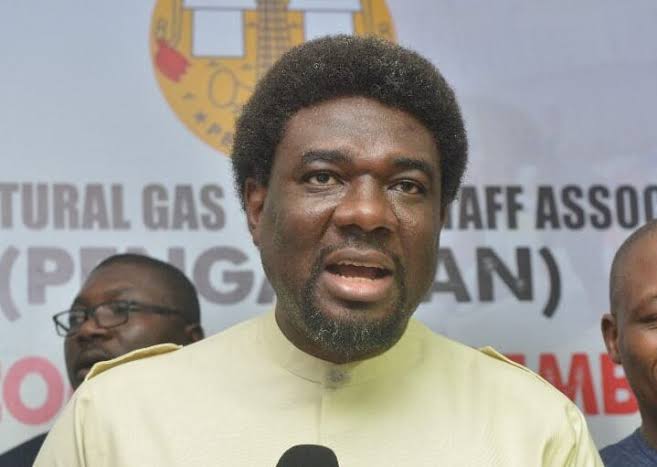
PENGASSAN President Festus Osifo, addressing journalists in Lagos on Thursday, described the order as an “aberration,” a “direct attack” on the Petroleum Industry Act (PIA), and an overreach of presidential authority that sets a dangerous precedent for the rule of law in Nigeria.
What the Executive Order Does
The Executive Order, signed on February 13 and publicly announced on February 18, is officially titled the “Presidential Executive Order to Safeguard Federation Oil and Gas Revenues and Provide Regulatory Clarity, 2026.”
It mandates that all oil and gas revenues — including royalties, taxes, profit oil, and profit gas — be paid directly into the Federation Account Allocation Committee (FAAC) rather than being retained and managed by NNPC Ltd. The order specifically removes NNPC’s entitlement to a 30 percent management fee on profit oil and profit gas, as well as its 30 percent frontier exploration fund, both of which were established under the PIA.
The Presidency has anchored the directive on Section 5 of the 1999 Constitution and Section 44(3), which vests ownership and control of mineral resources in the Federal Government, arguing that the move restores the constitutional revenue entitlements of federal, state, and local governments.
PENGASSAN’s Case Against the Order
Osifo’s objections were sweeping and pointed. He argued that an executive order cannot override an Act of Parliament, comparing the action to “signing an executive order setting aside the Independent National Electoral Commission.”
“The executive order that was signed by the president is a direct attack on the PIA — specifically Sections 8, 9, and 64,” Osifo said. “You will agree with me that executive orders cannot supersede the law of the land.”
He warned that the order, if not reversed, would negatively affect the operations and liquidity of NNPC Ltd to such an extent that salaries and financial obligations to workers would be at risk. He estimated that approximately 4,000 PENGASSAN members employed by NNPC could face redundancy within months if the company’s revenue streams are severed.
“If this is allowed to sail through the way it is today, I can tell you that in the next few months our members are in danger of being declared redundant because the company may not be able to meet its obligations,” Osifo warned.
‘The President Was Wrongly Advised’
In a notable personal appeal, Osifo suggested that Tinubu had been misled by advisers, arguing that some of the financial calculations presented to the President were incorrect. He pointed to Tinubu’s own background in the oil industry, including his previous experience at ExxonMobil, to argue that a fully briefed President would not have signed the order in its current form.
“We know that the president of the Federal Republic of Nigeria has done everything possible to attract investment into this sector,” Osifo said. “This order sends a troubling signal to the global investment community that Nigeria cannot be trusted to keep its laws.”
He cautioned that the international community could lose confidence in the PIA itself, fearing that a government willing to override statutory provisions through executive instruments could similarly alter royalties, tax terms, or protections that underpin billions of dollars in existing and prospective investments.
Labour Escalation on the Horizon
PENGASSAN has begun consultations with the Nigeria Union of Petroleum and Natural Gas Workers (NUPENG), its sister union representing junior oil workers, while its National Executive Council is scheduled to meet next week to determine the next course of action should the government fail to withdraw the order.
“Our interest is that this industry will survive,” Osifo said, but the union’s language left little ambiguity about the possibility of industrial action if dialogue fails.
The confrontation sets the stage for heightened tension in Nigeria’s most critical economic sector at a delicate moment — just as the Dangote Refinery reaches full capacity, international oil majors are exploring new investments, and the government is counting on oil revenues to fund its ambitious N58.47 trillion 2026 budget.
The Bigger Picture
The Executive Order exposes a fundamental tension at the heart of Nigeria’s oil governance: the balance between ensuring that oil revenues flow transparently to the Federation Account and preserving the commercial autonomy that NNPC Ltd needs to operate as a viable business entity under the PIA framework.
The PIA, which took over two decades to enact and was signed into law in 2021, was designed to provide exactly the kind of regulatory certainty and investor confidence that Nigeria’s oil sector had long lacked. Critics of the Executive Order argue that bypassing its provisions through an executive instrument undermines the very foundation on which the industry’s future was being built.
For the Tinubu administration, the calculus appears to be about fiscal control — ensuring that oil revenues are not retained by NNPC in ways that reduce what reaches the three tiers of government. For PENGASSAN and the broader industry, the concern is that the cure may prove worse than the disease.
All eyes now turn to whether the Presidency will engage in the kind of stakeholder consultation that PENGASSAN is demanding — or whether the oil sector is headed for its most serious labour confrontation in years.