

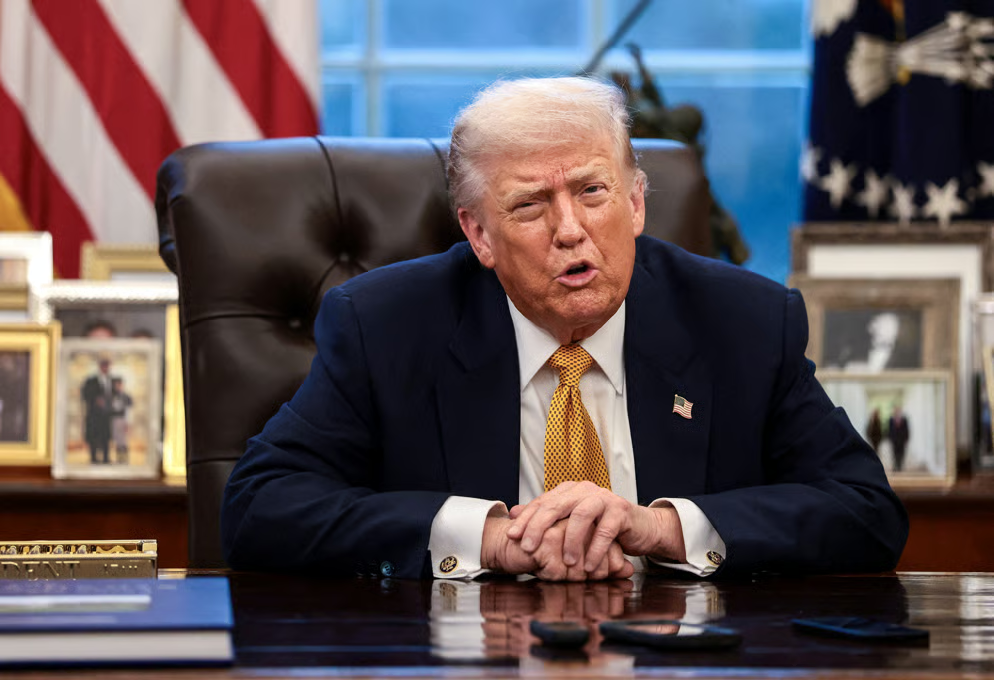
The president’s comments mark the most serious challenge to the Western military alliance since its founding in 1949, as European allies scramble to respond
In a stark escalation of tensions between the United States and its closest allies, President Trump has declared he is “absolutely” considering withdrawing America from NATO. Speaking to The Telegraph, Trump criticized the military alliance as a “paper tiger” and “weak and unreliable partner” after fellow member states refused to join the U.S. in its military campaign against Iran. The comments represent the most serious challenge to the 76-year-old Western military alliance since its founding in 1949.
As the United States-Iran conflict enters its 33rd day, the Trump administration has intensified its military operations in the Middle East. In a national address yesterday, the president claimed that military objectives were “nearing completion” and alleged that Iran had requested a ceasefire. However, Iran’s Foreign Ministry swiftly responded, stating: “President Trump’s claims that Iran requested a ceasefire are false and baseless.” The contradiction underscores the deep mistrust between the two nations as diplomatic channels remain largely frozen.
The military conflict has had profound implications for global energy markets. The Strait of Hormuz, through which approximately 20% of the world’s oil passes, has been effectively shut down due to the ongoing tensions. This disruption sent shockwaves through international markets, causing crude oil prices to temporarily dip below the $100 per barrel threshold as investors briefly hoped the ceasefire claims might lead to a rapid resolution. However, with those prospects now dimmed by Iran’s denial, energy prices have stabilized at higher levels, threatening to disrupt global economic growth.
Trump’s threat to abandon NATO comes at a moment of heightened vulnerability for the alliance. European members, already burdened with their own defense spending commitments and internal divisions, face the prospect of navigating a more dangerous geopolitical landscape without American security guarantees. For decades, the NATO alliance has served as the cornerstone of Western security, deterring aggression and maintaining peace across Europe. The potential withdrawal of the United States would fundamentally reshape the security architecture of the Western world.
Political analysts are divided on whether Trump’s NATO threat represents a genuine policy shift or a negotiating tactic. Some observers view the comments as an attempt to pressure European allies into supporting American military objectives in the Middle East. Others suggest the president is laying groundwork for a dramatic foreign policy realignment that could reshape post-World War II international order. The stakes could not be higher for global security and economic stability. European leaders have begun emergency consultations to determine how to respond to Trump’s ultimatum. Without American military backing, many NATO members would be forced to dramatically increase defense spending and potentially pursue independent defense arrangements. France has signaled that Europe should consider building its own security architecture independent of Washington, while Germany cautiously called for dialogue to resolve the impasse. The coming weeks will likely prove critical in determining whether NATO survives this challenge intact.