

The U.S.-Israeli military campaign against Iran has now entered its third week, and the economic shockwaves are being felt from gas stations in Ohio to shipping lanes in the Persian Gulf. Brent crude surged past $106 a barrel on Sunday before easing slightly to around $105 on Monday, marking a roughly 40 percent increase since hostilities began.
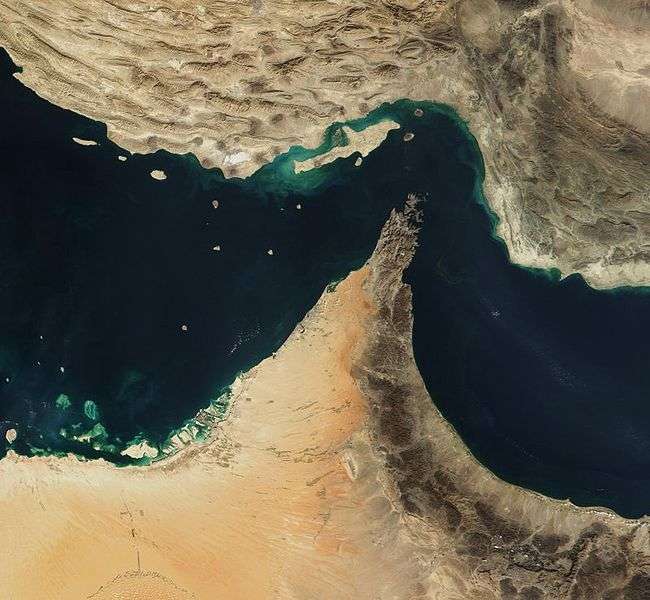
At the center of the crisis is the Strait of Hormuz, the narrow waterway between Iran and Oman through which approximately 20 percent of the world’s oil supply typically flows. Since Iran’s Islamic Revolutionary Guard Corps declared the strait closed to commercial shipping, tanker traffic has all but halted. Iran’s IRGC has been blunt in its messaging, warning that no oil would pass through the strait and suggesting prices could reach $200 per barrel if the blockade continues.
President Donald Trump has responded by calling on NATO allies and China to join a naval coalition to escort tankers through the strait. So far, the response has been lukewarm. Japan and Australia have both declined to send warships, and European allies remain cautious about direct involvement in what many see as a U.S.-initiated conflict.
Treasury Secretary Scott Bessent told Sky News that the U.S. Navy would escort oil tankers through the Hormuz corridor when it becomes militarily possible, but acknowledged the operational challenges. Meanwhile, more than 30 countries have agreed to a coordinated release of 400 million barrels from strategic petroleum reserves, with the U.S. contributing 172 million barrels from its own SPR.
The impact on American consumers has been swift and painful. According to AAA, the average price for a gallon of regular gas in the U.S. has hit $3.70, up from $2.93 just a month ago. Diesel prices have climbed even more sharply, now sitting just under $5 a gallon. Analysts at Rystad Energy warn that Brent crude could reach $135 per barrel if the disruption persists for four months.
The conflict shows no signs of de-escalation. Israel announced a fresh barrage of strikes on western Iran over the weekend and has expanded its ground operations in Lebanon. Iran’s foreign minister flatly denied Trump’s claim that Tehran had requested a ceasefire, calling the assertion propaganda.
For global markets, the combination of a prolonged Hormuz closure, rising energy costs, and geopolitical uncertainty has created the most volatile trading environment since Russia’s invasion of Ukraine in 2022. The Federal Reserve’s upcoming interest rate decision, with the FOMC meeting this week, adds another layer of anxiety for investors already navigating turbulent waters.
The question now is whether diplomatic channels can produce results before the economic damage becomes entrenched. Bessent’s meeting Sunday with China’s Vice Premier on trade could set the stage for a broader conversation at a potential late-March Trump-Xi summit. But until oil begins flowing through Hormuz again, the world is essentially operating with a 20 percent hole in its energy supply chain.