

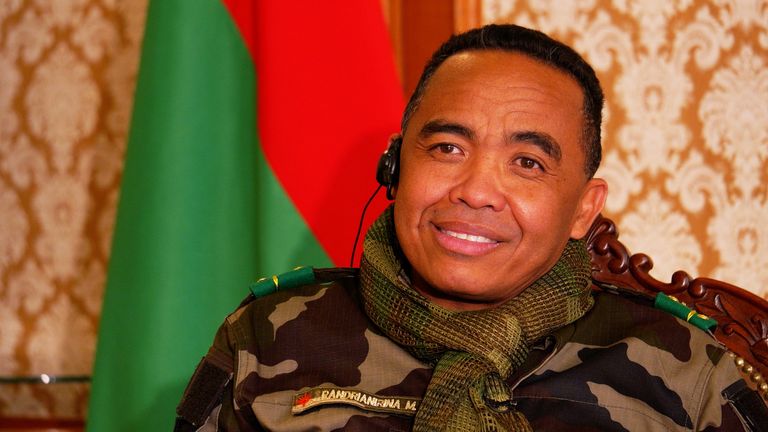
Colonel Michael Randrianirina, the military officer who took control of Madagascar in October 2025, has dissolved his government and dismissed Prime Minister Herintsalama Rajaonarivelo along with the entire cabinet. The move, announced on Monday through presidential spokesperson Harry Laurent Rahajason, came without explanation but follows weeks of mounting pressure from the very youth movements that helped bring Randrianirina to power.
The presidency said permanent secretaries would manage ministry operations until a new prime minister is appointed, adding that the process would follow constitutional procedures. No timeline was given.
Randrianirina seized control of the Indian Ocean island nation after weeks of youth-led protests against persistent water and power shortages forced out his predecessor, Andry Rajoelina. Rajoelina had secured a controversial third term through a disputed 2023 election, and when his government responded to the demonstrations with a violent crackdown that left many dead and injured, the military stepped in and sided with the protesters.
The colonel has denied staging a coup, insisting the Constitutional Court transferred power to him. He pledged a two-year transition period, with a program released in late February outlining wide-ranging consultations through the end of 2026, a new draft constitution, and a presidential election in the last quarter of 2027.
But the youth groups that catalysed the uprising have grown increasingly frustrated. Activist movements known as Gen Z and Gen Y recently issued a 72-hour ultimatum demanding Randrianirina’s resignation, citing dissatisfaction with the pace of reforms and what they described as a lack of transparency in governance. These groups had opposed the appointment of Rajaonarivelo from the outset, arguing that the businessman was selected without consultation and had alleged ties to the previous administration.
The cabinet dissolution effectively centralises power within the presidency and the military hierarchy, removing the civilian buffer that the prime minister’s office was meant to provide. Analysts say this is a high-risk move that stakes Randrianirina’s remaining legitimacy entirely on his own performance, with no political shield against growing public discontent.
Internationally, the Southern African Development Community had directed Madagascar’s military authorities to present a roadmap for restoring democratic governance, including a schedule for elections by the end of February. That deadline has passed without a clear resolution. The African Union Peace and Security Council was set to convene a meeting on the situation this week, marking its fourth session on Madagascar since October.
Randrianirina has been busy courting new diplomatic alliances. He visited Moscow last month, where President Vladimir Putin received him and the two declared a “new era of cooperation.” Days later in Paris, he and President Emmanuel Macron announced a “renewed” and “balanced” partnership with France, the former colonial power.
With Madagascar’s GDP per capita among the lowest in Africa, widespread infrastructure failures, and the devastation caused by Cyclone Gezani in February, the pressure on the transitional government is immense. Whether this cabinet reshuffle represents a genuine course correction or a tactical delay to consolidate authority remains the central question in Antananarivo.