

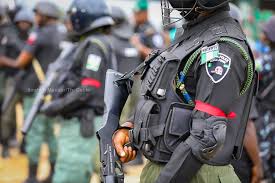
After decades of debate, all 36 state governors have submitted a constitutional amendment framework for decentralized policing — and the Senate says it could become law before the end of 2026.
Nigeria may be on the verge of its most significant security reform in decades. On March 22, the Nigeria Governors’ Forum officially submitted a comprehensive framework for the establishment of state police forces to the 10th National Assembly, marking the most concrete step yet toward decentralizing the country’s troubled policing system.
The announcement was made by NGF Chairman and Kwara State Governor Abdulrahman AbdulRazaq during a Sallah visit by 25 governors to President Bola Ahmed Tinubu at his Ikoyi residence in Lagos. The proposal, which has the backing of all 36 state governors, calls for a constitutional amendment to allow each state to establish and fund its own police force alongside the existing federal Nigeria Police Force.
The Senate has responded with unusual speed, pledging to complete the constitutional amendment process before the end of 2026. Senate leadership has promised that citizens will have input in shaping the final legislation, signaling awareness that this is a reform with enormous implications for everyday Nigerians.
For many Nigerians, state police cannot come soon enough. The country faces a multi-layered security crisis that has overwhelmed the centralized federal police force. Banditry in the northwest, Boko Haram and ISWAP insurgencies in the northeast, kidnapping along major highways, herder-farmer conflicts in the Middle Belt, and separatist agitation in the southeast have combined to create a patchwork of threats that a single national force has proven unable to address.
Supporters of the reform argue that state police would bring policing closer to communities, enabling faster response times and local intelligence gathering. Governors, who currently bear significant informal responsibility for state security, would gain formal authority to recruit, deploy, and manage officers who understand local terrain, languages, and dynamics.
The economic logic is compelling as well. Nigeria’s federal police force is chronically underfunded and understaffed, with approximately 370,000 officers for a population exceeding 220 million. That ratio is among the worst in the world. State police forces could supplement this capacity with locally sourced funding and recruitment.
But the proposal is not without significant critics. Human rights organizations and opposition politicians have raised concerns about the potential for abuse. In a country where state governors wield considerable power and some have been accused of authoritarian tendencies, critics argue that state-controlled police forces could become instruments of political repression, voter intimidation, and the harassment of political opponents and journalists.
There are also practical questions. How will state police be funded in states that already struggle to pay civil servants? What happens when state police jurisdiction conflicts with federal police operations? How will oversight and accountability be structured to prevent the creation of what some critics have called potential “governor’s militias”?
President Tinubu, who has championed the reform as part of his broader governance agenda, has urged lawmakers to approach the amendment process with both urgency and care. His administration has framed state police as essential to addressing what it calls Nigeria’s “deepening security crisis” while acknowledging that robust safeguards will be needed.
The IMF, currently conducting its Article IV consultation in Nigeria, has also noted the security situation as a factor affecting economic performance. The Central Bank Governor, Olayemi Cardoso, recently told investors in London that Nigeria’s economy is now better equipped to absorb global shocks, pointing to bank recapitalization efforts that have attracted significant foreign investment. But sustained economic growth will require the kind of security stability that many believe only decentralized policing can deliver. If the Senate meets its self-imposed deadline, Nigerians could see state police forces beginning to take shape by early 2027. Whether this historic reform fulfills its promise of safer communities or opens new avenues for abuse will depend entirely on the details of the legislation and the political will to enforce accountability. For now, the fact that the proposal has finally moved from rhetoric to the floor of the National Assembly represents a genuine milestone.