

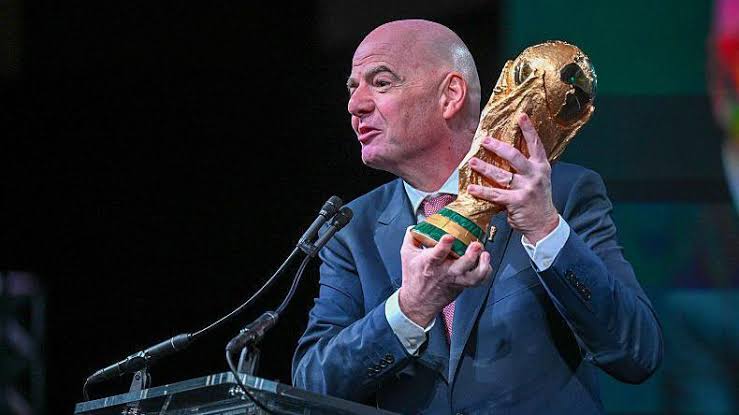
FIFA President Gianni Infantino is facing one of the most challenging periods of his tenure as a string of controversies surrounding governance, political neutrality, and commercial reforms continue to spark criticism from football bodies, human rights groups, and fans.
The latest backlash centres on Infantino’s reported proposal to establish FIFA Forward Enterprise (FFE), a commercial entity that would allow private investors to acquire stakes in FIFA’s commercial rights. The plan has drawn strong opposition from UEFA and several European football associations, which argue that such a move could undermine FIFA’s independence and place excessive commercial influence over the world’s governing body for football.
According to reports, UEFA has warned that the proposal risks changing the nature of international football governance and has threatened to reconsider its participation in future FIFA competitions if the reforms proceed without broader consultation.
The controversy follows criticism over FIFA’s handling of disciplinary matters during the recently concluded 2026 FIFA World Cup. Infantino was accused of allowing political considerations to influence football after FIFA overturned a suspension involving United States forward Folarin Balogun, a decision that came after public comments by U.S. President Donald Trump. The incident prompted renewed debate over FIFA’s commitment to political neutrality, with advocacy group FairSquare filing a complaint with the International Olympic Committee (IOC).
Infantino also came under scrutiny after issuing a strongly worded open letter defending the 2026 World Cup and accusing critics of “spreading hate.” While he described the tournament as one of the most successful in FIFA’s history, human rights organisations and football observers argued that his remarks dismissed legitimate concerns over governance, transparency, and the administration of the competition.
Further criticism emerged after reports revealed extensive private jet travel by the FIFA president throughout the World Cup, drawing accusations that the organisation’s environmental commitments were inconsistent with its leadership’s actions.
Adding to the controversy was the leak of a congratulatory letter sent by Infantino to the Argentine Football Association praising the team’s professionalism while FIFA was simultaneously investigating incidents surrounding the World Cup final. Critics said the timing of the letter created an appearance of bias and raised questions about FIFA’s impartiality.
Despite the growing criticism, Infantino has defended FIFA’s decisions, insisting that the organisation remains committed to developing football globally while ensuring the sport continues to grow commercially and competitively.
The controversies have nevertheless intensified scrutiny of FIFA’s leadership at a time when the organisation is preparing for future international competitions. With growing resistance from major football federations and continued calls for greater transparency, the coming months are expected to test Infantino’s leadership and FIFA’s ability to maintain unity within the global football community.