
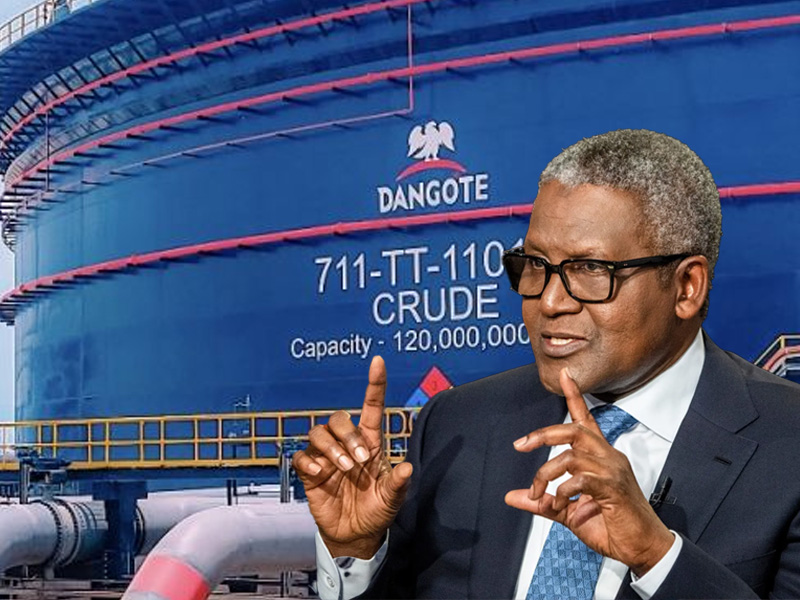
Aliko Dangote has a habit of entering industries that Nigeria desperately needs and that no one else is willing to bet on at scale. He did it with cement. He did it with fertiliser. And then, against extraordinary odds and with a price tag that swelled to over $20 billion, he did it with oil refining — building Africa’s largest refinery on the Lagos coastline when critics said it could never be done.
Now, with the Dangote Petroleum Refinery & Petrochemicals finally operational and producing approximately 650,000 barrels of refined products daily, Africa’s richest man is looking ahead. His next targets, announced this week: steel production, electricity generation, and port infrastructure — three sectors that sit at the very heart of Nigeria’s industrial bottleneck.
The Problem He’s Trying to Solve
To understand why these sectors matter, consider a few numbers.
Nigeria spends approximately $4 billion every year importing steel — a staggering haemorrhage of foreign exchange for a country that has spent years battling a chronic dollar shortage. The country has iron ore deposits, it has gas, it has demand — but it does not have the industrial infrastructure to convert raw materials into the steel that its construction, manufacturing, and oil sectors require. The result is that Nigeria builds its roads, its bridges, and its buildings largely on imported metal.
The electricity picture is even more striking. Nigeria’s national grid has an installed capacity of roughly 12,500 megawatts — but on most days, far less than that is actually dispatched to consumers. With a population of over 220 million and an economy that aspires to industrial-scale manufacturing, the country would need somewhere in the region of 40,000 MW to meet basic demand. The result: an estimated 60% of Nigerians lack consistent access to electricity, businesses run on diesel generators, and factories operate at fractions of their potential output.
These are not new problems. But they are the kind of structural gaps that Dangote, at his scale, has historically decided to treat as opportunities.
What Dangote Is Planning
Details of the specific investment sizes and timelines are still emerging, but the direction is clear. In announcements this week, the Dangote Group outlined three pillars of its next industrial push:
Steel. Dangote plans to establish a steel production facility in Nigeria, targeting a sector where the country currently imports nearly everything it uses. A domestic steel industry would not only save the $4 billion in annual import bills but could anchor an entirely new tier of Nigerian manufacturing — from automotive components to construction materials to industrial machinery.
Electricity generation. Dangote is targeting investments in power generation capacity — a move that would serve both the group’s own enormous energy needs and, potentially, the broader national grid. Given the refinery’s scale, the group already operates significant power infrastructure internally; the expansion signals an ambition to go further.
Port infrastructure. To support large-scale manufacturing and trade, the group is also looking at building additional port capacity — addressing one of the other chronic bottlenecks that adds cost and delay to Nigeria’s supply chains.
The combined effect, if executed, would lift total employment across the Dangote Group from around 30,000 workers today (roughly 80% of them Nigerian) to approximately 65,000 — making it one of the largest private employers on the continent.
Dangote also separately announced plans to list shares in the refinery on the Nigerian Stock Exchange, a move that would allow ordinary Nigerians to own a stake in the asset that has dominated business headlines for the better part of a decade.
The Challenges Ahead
None of this will be easy. Nigeria’s steel and power sectors have been graveyard for ambition before.
The Ajaokuta Steel Mill — begun in 1979 with Soviet assistance and billions in public funds — remains one of the most expensive unfinished projects in African history, never having produced a single tonne of commercial steel despite absorbing an estimated $8 billion over four decades. Power sector privatisation, launched with fanfare in 2013, has produced only modest gains against a backdrop of regulatory dysfunction, gas supply shortfalls, and distribution infrastructure that struggles to carry whatever electricity is generated.
Dangote will need to navigate the same terrain: unreliable gas supply contracts, grid instability, land acquisition battles, regulatory delays, and the ever-present challenge of operating at industrial scale in a country where infrastructure can be both a product and a prerequisite.
But if there is one thing the refinery proved, it is that Dangote is willing to absorb delays, cost overruns, and years of scepticism if he believes the end product is worth it.
What It Would Mean for Nigeria
If the steel ambition is realised, Nigeria could begin to reclaim a portion of that $4 billion annual import bill — keeping foreign exchange in the country and building upstream jobs in mining, transport, and manufacturing. If the power investment materialises at meaningful scale, it could ease — even marginally — the energy poverty that constrains everything from household welfare to factory output.
Neither transformation will happen quickly. Industrial projects of this magnitude are measured in years, sometimes decades. But the announcement signals something important: that Africa’s most watched industrialist believes Nigeria’s next chapter is worth betting on.