
It is the conviction Nigeria has been waiting more than four years for, and when it finally landed
on Thursday afternoon, the man at the centre of it was nowhere to be found.
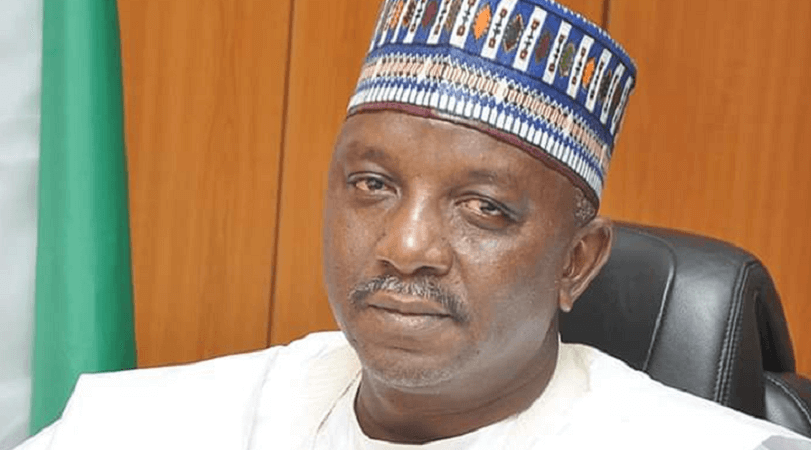
Justice James Omotosho of the Federal High Court in Abuja delivered judgment in the longrunning corruption trial of former Minister of Power Saleh Mamman, finding him guilty on all 12
counts of fraud and money laundering filed by the Economic and Financial Crimes Commission.
The court held that the EFCC had proved beyond reasonable doubt that Mamman, who served
under former President Muhammadu Buhari from 2019 to 2021, was complicit in the illegal
diversion of about ₦33.8 billion in public funds.
But Mamman himself was not in the dock. His lawyer told the court that the former minister’s
whereabouts had been unknown since the notice of the judgment date was issued. A personal
assistant later claimed Mamman was “ill,” but produced no medical evidence. Justice Omotosho
proceeded with judgment regardless, then issued a warrant for the convict’s arrest. Sentencing
was fixed for Wednesday, May 13.
The financial details laid out in the courtroom paint one of the most precise pictures of grand
corruption ever presented against a former Nigerian minister. The EFCC alleged that Mamman
conspired with senior ministry staff to divert roughly ₦22 billion that was originally appropriated
for the Zungeru Hydroelectric Power Project in Niger State and the long-stalled Mambilla
Hydroelectric Project in Taraba State — two flagship power schemes meant to add thousands of
megawatts to Nigeria’s hobbled grid.
Beyond that, the court found that Mamman paid $655,700 — about ₦200 million at conversion —
in cash for a piece of landed property in Abuja, bypassing the banking system entirely. Under the
Money Laundering (Prohibition) Act, any cash transaction above ₦5 million by an individual must
go through a financial institution. The cash purchase, the judge said, was emblematic of a
deliberate scheme to wash stolen public money into private real estate.
Prosecutors called 17 witnesses and tendered 43 exhibits — bank statements, contract papers
and forensic-accounting reports. The defence argued that the funds were properly disbursed for