

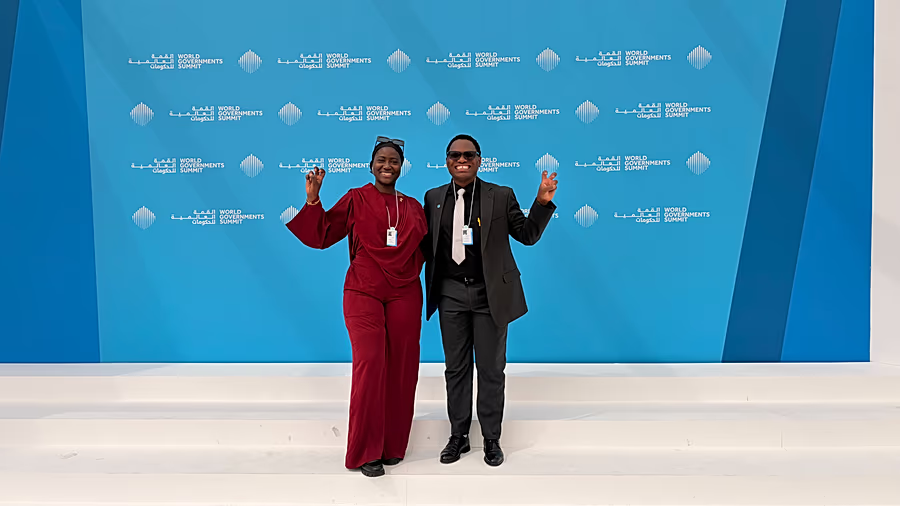
In many parts of the world, limited internet access and low smartphone penetration continue to restrict access to education. To help bridge this digital divide, Texas Christian University students Happy Niyorurema and Mame Niang have developed an innovative system that delivers educational content through ordinary phone calls, eliminating the need for smartphones or internet connectivity.
Their groundbreaking solution was recognised in Dubai, where they received the Global Best M-Gov Award for innovation in mobile government services.
“When we talk about AI, we often assume people are online and able to use it. But there are 2.9 billion people—most of them in the Global South—who still lack internet access. That’s just over one-third of the world’s population,” said Niyorurema. “We built our own artificial intelligence model, but instead of putting it on the web, we deployed it on telephony.”
The system allows learners to access educational content through standard voice calls, making it usable in both urban centres and remote rural communities.
“It’s extremely easy to use—you don’t need a smartphone,” Niang explained. “This solution is innovative because we often assume people have access to smartphones and the internet. With this, even the most basic phone works. We’ve already launched a pilot programme in Rwanda, and we plan to expand across Africa, starting with Senegal, Zambia and other countries.”
The innovation was showcased at the World Government Summit in Dubai, which brought together leaders and policymakers from around the world to explore advances in technology, governance and public service delivery. This year’s summit concluded on Thursday.