

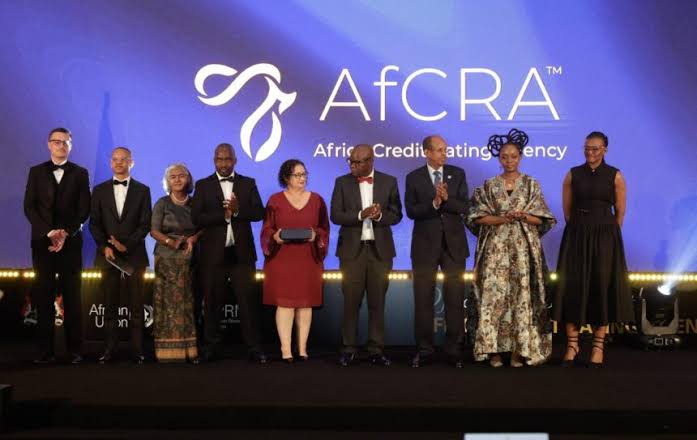
The African Union-backed Africa Credit Ratings Agency has officially launched in Mauritius, creating a home-grown alternative to global ratings firms such as Moody’s, Fitch and S&P Global Ratings after nearly a decade of planning.
The agency, known as AfCRA, began operations on Wednesday with its headquarters in Mauritius. Supporters say it could give African governments and companies a ratings institution more familiar with the continent’s economic realities and potentially help improve access to international capital.
Nigerian President Bola Tinubu welcomed the launch, describing the new agency as an important step towards strengthening Africa’s financial architecture. In a post on X, Tinubu said the initiative could help Africans take greater ownership of how the continent’s economies are assessed.
The launch follows years of debate within the African Union over the influence of international credit-rating agencies. African governments have repeatedly argued that ratings by major global firms can fail to adequately account for local conditions and can contribute to higher borrowing costs.
Critics of the existing system have particularly pointed to what they see as a tendency to treat African economies as higher-risk markets, even when economic fundamentals or reform efforts have improved. Governments have also complained that rating downgrades can increase borrowing costs and trigger wider investor concerns.
AfCRA’s supporters say the answer is not to abandon independent ratings, but to create stronger competition and ensure that African perspectives are represented in the assessment process.
The agency’s launch, however, comes with a significant credibility test.
Analysts say AfCRA’s reputation will depend largely on whether it is prepared to issue ratings that governments may find uncomfortable. A willingness to downgrade an African sovereign when the underlying economic evidence warrants it would demonstrate that the agency is an independent ratings institution rather than a vehicle for protecting governments from negative assessments.
That could become one of its earliest challenges. Credit ratings are intended to provide investors with an independent assessment of the likelihood that borrowers will meet their financial obligations. If investors believe a ratings agency is reluctant to deliver negative assessments, its ratings are unlikely to carry the same weight in financial markets.
AfCRA therefore faces a delicate balancing act. It must understand the specific economic and political circumstances of African countries while maintaining standards that investors regard as objective and credible.
The agency is also entering a market dominated by three major international firms. Moody’s, S&P Global Ratings and Fitch have extensive global investor networks and decades of rating history, giving their assessments considerable influence over how countries and companies are priced in international debt markets.
For African governments, the potential benefits could include greater competition, additional assessments of sovereign risk and a ratings methodology developed with deeper knowledge of African economies.
But AfCRA’s success will ultimately be judged by the market. Investors will determine whether its ratings provide useful information and whether they can be trusted when the assessments are positive, negative or politically difficult.
The launch in Mauritius is therefore only the beginning. The agency’s real test will come when it has to choose between protecting the reputation of an African government and delivering an independent assessment of its creditworthiness.