

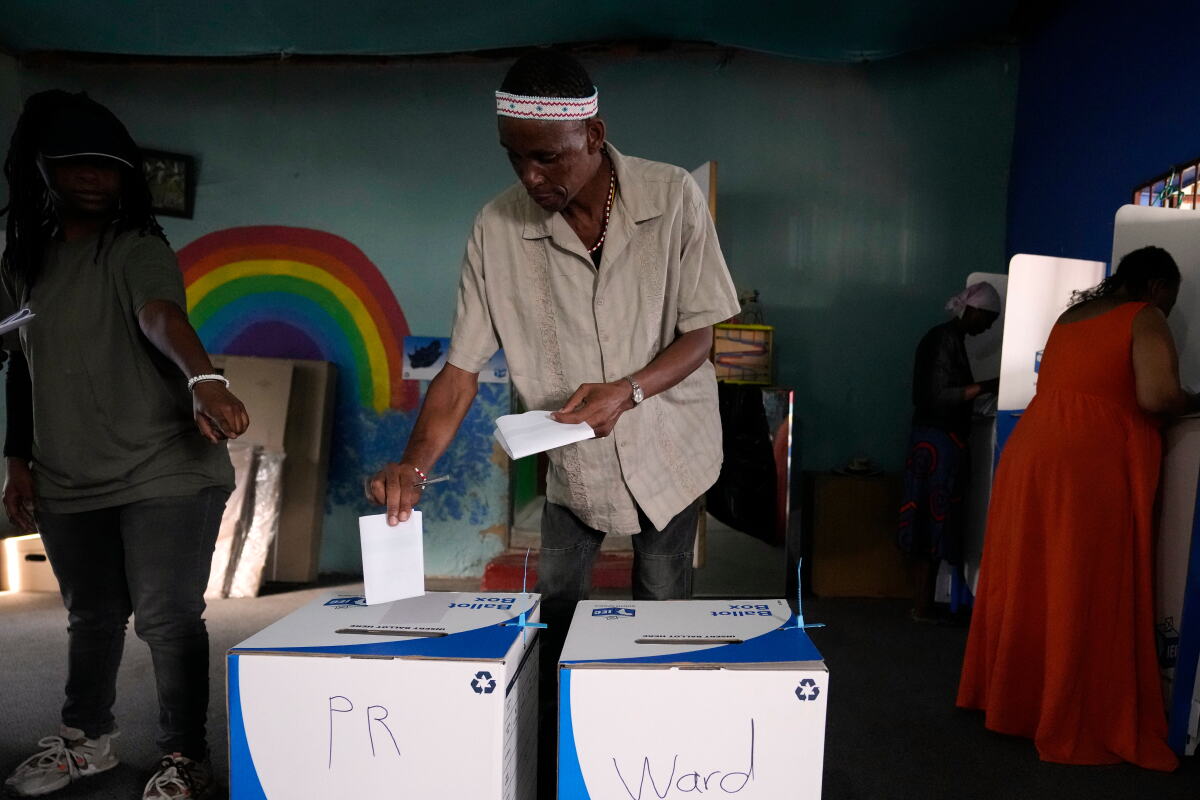
South Africa’s ruling African National Congress is holding a narrow lead over the opposition
Democratic Alliance in early results from Wednesday’s municipal elections, but the numbers
coming out of the Electoral Commission this morning tell a story the party had hoped not to hear.
With counting still underway, the ANC is sitting at around 32 percent, with the DA close behind
at about 27 percent. Final results are not expected until Sunday.
The Electoral Commission has called for calm and patience as returns continue to trickle in from
urban strongholds and rural wards. Officials have insisted the slower-than-usual count is a
function of volume and verification, not irregularities. But the drip-drip of results has turned
what was supposed to be a routine local poll into a nerve-jangling political event broadcast live
into every South African living room.
For the ANC, the message in the numbers is brutal. Five years ago the party was losing ground;
now it is fighting for every percentage point. If the trend holds, this will be the worst municipal
performance in the party’s history — extending a slide that began with the national vote last year
and that senior figures had quietly hoped would stabilise once the dust from coalition
government had settled.
The DA, by contrast, is doing exactly what its strategists wanted. By running a disciplined,
service-delivery-focused campaign in the metros, the party has turned frustration over blackouts,
water cuts and crumbling infrastructure into votes. Johannesburg, Tshwane and Ekurhuleni are
now effectively in play, and coalition talks — formal or informal — are already being briefed
out.
Smaller parties are also sensing opportunity. The Economic Freedom Fighters, uMkhonto
weSizwe and a handful of regional outfits are expected to end up as kingmakers in several hung
municipalities. That is a recipe for the kind of unstable, multi-party coalitions that have plagued
South African cities for the past five years, with mayors swapped out mid-term and service
delivery held hostage to political bargaining.
On the ground, voter turnout appears to have held up better than many polls predicted,
particularly in middle-class and township wards where fatigue with power cuts and crime was
expected to keep people at home. Election monitors reported largely peaceful voting on
Wednesday, though scattered incidents of logistical problems at polling stations have fed online
conspiracy theories about the count.
The implications reach beyond local government. South Africa’s president is watching these
results closely. A weaker-than-expected ANC performance will embolden internal critics,
complicate the party’s ability to steer a national coalition, and could force a reshuffle sooner than planned. Business lobbies, already nervous about policy drift, are warning that prolonged
coalition haggling will delay the structural reforms the economy badly needs.
For now, the ANC is still ahead — just. But the party that ran South Africa unchallenged for
three decades is being reduced, ward by ward, to the kind of narrow plurality that forces it to
share power. Sunday’s final numbers will confirm whether that shift is now permanent.
Note: Figures reflect early counts reported on November 6, 2026. Final percentages may shift
materially before the IEC publishes verified totals on Sunday