

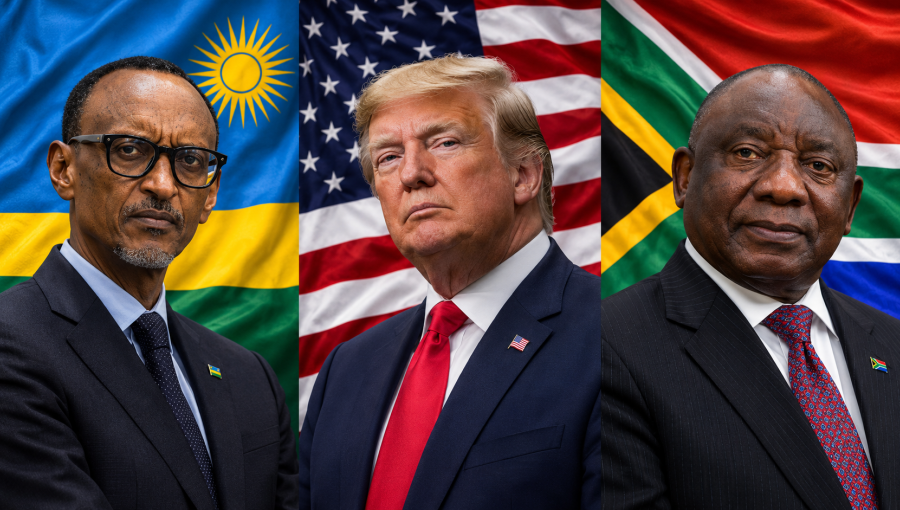
The United States has moved to cut South Africa and Rwanda from the African
Growth and Opportunity Act (AGOA) trade pact, in a decision landing on African
capitals this Wednesday morning and reshaping the continent’s biggest preferential
trade relationship with Washington.
The two countries, among the most prominent AGOA users on the continent, were
flagged in a U.S. notification circulating since late Tuesday, which Africa-focused
outlets led with in their November 4 roundups. Pretoria and Kigali both confirmed
receipt of the notice overnight, with ministers from both governments scrambling to
brief industry groups before markets opened.
AGOA has for a quarter-century granted eligible sub-Saharan African countries dutyfree access to the U.S. market on thousands of tariff lines, from textiles to citrus to
auto parts. For South Africa, the biggest beneficiary of the programme, the stakes
are enormous. Industry groups estimate tens of thousands of jobs in the auto,
agriculture and textile sectors depend directly on duty-free access to U.S. buyers.
For Rwanda, which has clashed with Washington before over its ban on secondhand
U.S. clothing imports, the move revives a long-running dispute. Kigali had previously
lost apparel-sector AGOA benefits in 2018 and only rejoined fully after extended
negotiations. A fresh exclusion will hit the country’s fast-growing Made-in-Rwanda
garment industry hardest.
The U.S. decision was not entirely a surprise. Trump administration officials have
for months floated conditioning African trade benefits on alignment with U.S.
positions on everything from Ukraine to critical minerals to diplomatic recognition
of Western Sahara. Still, the timing — just hours after the polls closed in the U.S.
midterms — has caught observers off guard.
South African trade officials, speaking to local media Wednesday morning, said they
would “exhaust every avenue” to challenge the decision. The Department of Trade
and Industry is expected to brief Parliament later today. Business leaders are urging
Pretoria not to retaliate immediately, warning that a tit-for-tat escalation could
compound damage to an economy already wrestling with slow growth.
The move also lands against a broader redrawing of the continent’s trade map.
Earlier reports this autumn had flagged Uganda, South Sudan and Somalia as likely
to lose AGOA eligibility next year on governance grounds. The addition of South
Africa and Rwanda — two of the programme’s largest and most politically
significant users — signals a sharper U.S. posture.
For ordinary workers, the pain will be felt first in factories around Cape Town,
Durban and Kigali, where buyers have already begun hedging by sourcing from
Kenya, Lesotho and Madagascar. Analysts at the Johannesburg Stock Exchange said
the rand softened in early trade against the dollar on the news. Rwandan franc
trading was thinner, but regional bond spreads widened slightly.
Across the continent, the decision will reinforce a narrative that has gained
momentum since the start of the year: African countries can no longer count on
preferential access to Western markets and must accelerate intra-African trade
through the African Continental Free Trade Area. African Union officials in Addis
Ababa, speaking on background, said a coordinated continental response is being
drafted.
What happens next depends on whether Pretoria and Kigali can find a diplomatic
off-ramp before the exclusion takes effect. For now, the message from Washington is
blunt — and Africa’s biggest trade file just got much more complicated, overnight.