
Uganda has begun pulling its soldiers out of Somalia, drawing the curtain on nearly two decades
of frontline duty against al-Shabaab and leaving the African Union’s stabilization mission
scrambling for a Plan B. Military chief Gen. Muhoozi Kainerugaba confirmed in recent days that
the withdrawal is already under way, with a complete pullout scheduled by 1 August 2027.
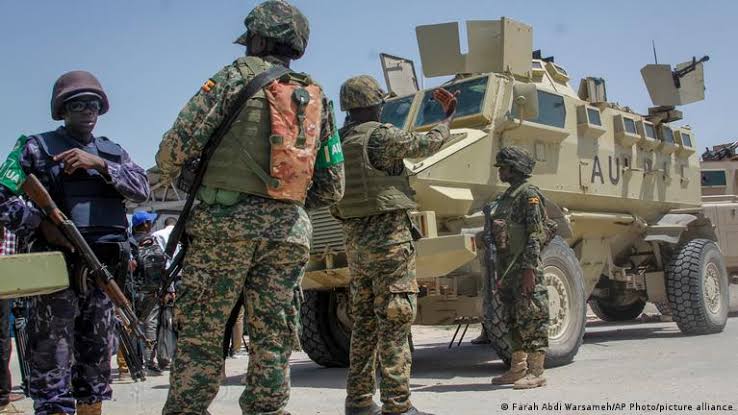
Uganda has been the backbone of African peacekeeping in Somalia since 2007, first under
AMISOM, then ATMIS, and now the newer AUSSOM mandate. Ugandan troops were the first to
deploy to Mogadishu when the capital was still a battleground, and the UPDF has suffered some
of the heaviest casualties of any contributing country. The decision to leave therefore
reverberates well beyond Kampala.
Behind the move is a tangle of money, politics and frustration. UNSOS, which bankrolls much of
the mission, has slashed support by roughly 25 percent after the United States pulled back its
contributions earlier this year. Frontline units have reported shortages of fuel, rations and
medical supplies. Ugandan commanders say they cannot keep fighting a counter-insurgency on
a shrinking budget.
President Yoweri Museveni has also sharpened his criticism of Somalia’s political class. In recent
public comments he accused Mogadishu’s leaders of allowing their internal rivalries to blunt
the campaign against al-Shabaab, which still controls large stretches of rural central and
southern Somalia and routinely stages bombings in the capital. Museveni, while announcing the
exit, insisted African states would continue to back Somalia’s stabilization even if outside
partners cut funding — though how, he did not say.
The reaction inside Somalia has been uneasy. Government officials have publicly thanked
Uganda for its sacrifices but privately worry about the operational gap. Burundi, Djibouti,
Ethiopia and Kenya all contribute troops to AUSSOM, but none match Uganda’s battlehardened footprint in the volatile Lower Shabelle and Middle Shabelle regions. Analysts warn
that a hasty handover could hand al-Shabaab a propaganda victory and open the door to fresh
territorial gains.
The withdrawal also reshapes the regional security map. Al-Shabaab remains East Africa’s most
dangerous jihadist franchise, with proven reach into Kenya and sporadic attacks in Uganda
itself. Western intelligence agencies have long treated the group as a top-tier counter-terrorism
priority. Fewer Ugandan boots in Somalia means more pressure on Kenyan border posts and on
US and Turkish advisers who have been quietly scaling up training missions in Mogadishu.
There is a domestic political layer too. Gen. Muhoozi, Museveni’s son and widely seen as his
likely successor, has used the Somalia announcement to burnish his nationalist credentials
ahead of Uganda’s own 2026 elections. His blunt social-media style — he announced the
deadline on X — has caused diplomatic headaches in the past, and officials in both the African
Union and Somali government have grumbled that they learned of the firm withdrawal date
online rather than through formal channels.
For Washington and Brussels, the message is harder to ignore. African troop-contributing
countries are telling donor capitals that the current funding model is simply broken. Without a
credible replacement plan, the AU’s longest-running peacekeeping operation could unravel
over the next 18 months — and with it, the fragile security architecture that has kept
Mogadishu’s airport open and its government functioning.
Uganda’s exit does not take effect overnight. Troops will roll home in phases, equipment will be
transferred or repatriated, and Somali National Army units are expected to absorb more
frontline positions. But the clock is now running. By August 2027, the longest-serving foreign
force in Somalia will be gone, and East Africa will find out whether its own armies can hold the
line without them.