

United Nations said in an update released Friday morning, warning that the humanitarian
crisis in Moyale is far from stable and that arrivals could continue to spike in the coming
days.
Fresh clashes erupted overnight in Ethiopia’s southern Somali regional zone, pushing yet
more families across the porous border into Marsabit County on the Kenyan side. The
International Organization for Migration described the situation as ‘fluid’ and said shelter,
food and clean water capacity in the border town of Moyale had already been pushed well
past the breaking point.
The violence traces back to a dispute over a Somali regional flag earlier in October and the
killing of a 13-year-old boy on October 18, incidents that ignited long-simmering ethnic
tensions between the Oromo and Somali communities. What began as localised clashes has,
over just under two weeks, turned into one of the sharpest cross-border displacement
events in East Africa this year.
Kenyan authorities say they are overwhelmed. Marsabit’s governor appealed Friday
morning for urgent assistance from Nairobi and international partners, warning that local
reserves of water, maize flour, and emergency medical supplies would be exhausted within
days unless the airlift of aid accelerates.
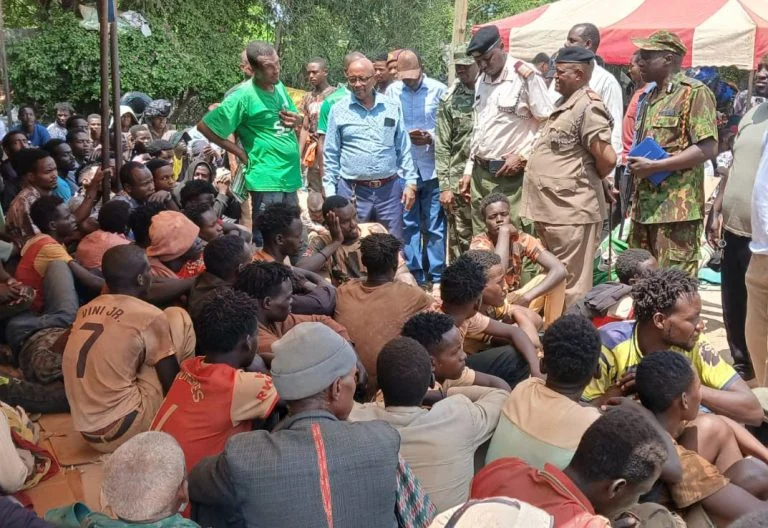
Many of those arriving are women and children, some walking for days through dry, rocky
terrain. Humanitarian workers on the ground describe scenes of exhaustion: families
sleeping in the open along the roadside near the Moyale One Stop Border Post, children
with signs of acute malnutrition, and a shortage of medical staff to screen for communicable
diseases.
The crisis is also raising fresh regional security alarms. Ethiopia’s federal government has
deployed additional security forces to the area but has struggled to contain inter-communal
violence that pre-dates the current flashpoint. Analysts warn that the longer the fighting
drags on, the greater the risk of destabilising the entire Horn of Africa region, which is
already contending with Sudan’s war and Somalia’s long-running insurgency The African Union has yet to issue a comprehensive statement on the Moyale displacement,
though officials in Addis Ababa say back-channel talks with Nairobi are underway. The UN
High Commissioner for Refugees called the situation ‘rapidly deteriorating’ and urged
donor countries to release emergency funding.
There is also a public-health dimension. Kenya is simultaneously dealing with containment
efforts around confirmed Ebola cases in parts of the country, and health officials now worry
that mass movement across the border without screening could complicate the response.
Temporary health posts have been set up at the main crossing points, but staff shortages are
acute.
For the people streaming south, the immediate concern is survival. Longer term, the
question is whether Ethiopia can restore order in time to allow safe returns, or whether this
becomes another protracted displacement, settled into camps that too often become
permanent fixtures of the regional map.