

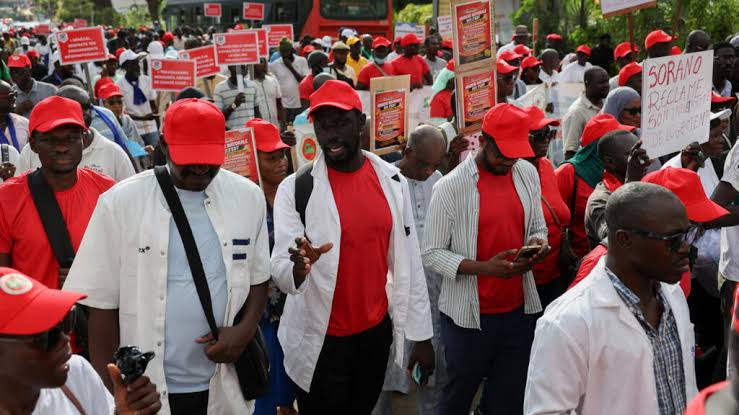
Senegal’s nationwide general strike entered a new phase on Friday, with unions tightening their
grip on key sectors and streets around government ministries in Dakar emptying out from the
morning rush. The action is a direct response to new labour laws that unions insist strip away
hard-won protections for workers, and it is quickly becoming the biggest domestic test yet for
President Bassirou Diomaye Faye’s young administration.
Labour leaders say the reforms, which the government argues are needed to attract foreign
investors and modernise the economy, in practice loosen rules around dismissals, weaken
collective bargaining and dilute benefits that civil servants and formal-sector workers have long
treated as untouchable. The strike has drawn in teachers, port workers, transport unions and parts
of the public health sector.
The economic hit is visible already. The Port of Dakar, a crucial lifeline for landlocked
neighbours including Mali and Burkina Faso, has reported slowdowns. Classes have been
suspended at major universities, and inter-city bus and taxi services are running at a fraction of
normal volume. Small traders in Sandaga market said they were showing up out of habit rather
than hope.
President Faye came to power in 2024 on a wave of young, reform-minded support, promising
clean government and a break from entrenched elite politics. The labour fight is a stern reminder
that reform in the real world — tax codes, pension rules, hiring and firing — tends to be exactly
where idealism meets resistance.
Opposition politicians have been quick to seize the moment. Figures associated with the old
guard are warning that the government is losing public trust, and some civil-society groups are
urging dialogue before more serious unrest sets in. The government, for its part, says the laws
will be refined but not withdrawn, insisting that Senegal cannot afford to remain uncompetitive.
The strike also lands at a sensitive moment regionally. West Africa has watched a run of political
turbulence over the past three years, from military takeovers in Mali, Burkina Faso and Niger to
pricing anger in Nigeria and Ghana. Senegal, long considered the region’s most stable
democracy, carries a particular symbolic weight when its streets quiet.
International partners are watching too. France, the IMF and the European Union have each been
publicly supportive of Dakar’s reform direction, with the IMF framing the labour overhaul as part
of a broader package needed to unlock concessional lending. A sustained strike complicates that
message considerably.
For ordinary Senegalese the question is simpler and sharper: whether the pain of today’s
rulebook changes will be matched by concrete gains in jobs, wages and dignity. Union leaders say the strike will continue through the weekend unless the government commits to real
negotiation. The next 48 hours will show whether Dakar can defuse this or whether a longer
standoff is forming.