

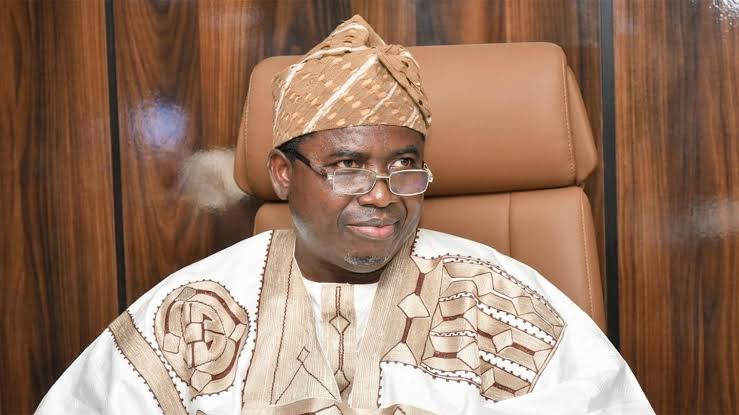
The chairman of Nigeria’s Independent National Electoral Commission (INEC), Prof
Joash Amupitan, declared on Wednesday morning that “algorithms will not decide”
the outcome of the 2027 general elections, insisting the will of Nigerian voters
remains the only legitimate determinant of who holds power.
Speaking at a national stakeholders’ forum in Abuja, Amupitan said the Commission
is undertaking a comprehensive audit of its electoral technology systems, covering
system redundancy, penetration testing and disaster recovery planning. He
confirmed INEC is also exploring the conduct of a mock presidential election ahead
of the 2027 vote.
“Responsible AI begins with institutional readiness, not technology,” the chairman
said, a line immediately seized on by civil-society groups who have spent months
warning that under-prepared election bodies could be gamed by both local
operatives and foreign actors.
The statement is politically explosive because it lands less than 24 hours after the
ruling All Progressives Congress inaugurated its 343-member Presidential
Campaign Council at the State House Banquet Hall, with President Bola Tinubu as
chairman and Senator Abdulaziz Yari as director-general. The APC’s formal flag-off
is scheduled for Kaduna on October 24.
Opposition figures have been loud this week. Journalist and former presidential
aspirant Dele Momodu told Premium Times on Thursday that Tinubu’s “grip on
Nigeria” has become worse than that of the late General Sani Abacha—an incendiary
comparison that is already dominating morning talk-radio in Lagos and Abuja. The
claim will do little to calm nerves inside INEC headquarters.
Amupitan said the Commission had spent the last 18 months conducting a forensic
audit of “every line of code” that failed during the previous electoral cycle, when
server-side glitches on election night triggered a nationwide credibility crisis for the
then-leadership of INEC. He added that the Commission has signed engagements with Microsoft, Google and the International Foundation for Electoral Systems
(IFES) to strengthen its technology stack.
The chairman also sounded an alarm about synthetic media. “The growing
sophistication of artificial-intelligence-driven disinformation is one of the most
serious threats to the credibility of Nigeria’s 2027 general election,” he said, urging
universities to treat electoral technology and electoral communication as a single
discipline.
INEC has confirmed it will deploy roughly 1.4 million ad-hoc staff for the 2027 polls,
the largest electoral workforce in Nigerian history. Logistics officials inside the
Commission admit the real risk is not the technology itself but the human links in
the chain: the agents who upload results, the officers who guard servers, the party
operatives who try to pressure both.
The political temperature on the ground is already rising. On Wednesday, police
confirmed one person killed when hoodlums attacked supporters of controversial
Ibadan broadcaster Oriyomi Hamzat, while NAFDAC announced it had seized N200
million worth of counterfeit alcohol packaging in Aba as part of its continuing
crackdown on fake-goods syndicates.
The combination of a confident ruling-party campaign machine, a bruised but
technocratic INEC, and a chorus of opposition voices accusing Tinubu of
authoritarian drift has turned mid-October 2026 into the unofficial starting gun for
Nigeria’s 2027 race—eighteen months out.
For voters, the question is simple and unsentimental: will their ballots count? INEC’s
chairman has staked his credibility on the answer. Nigerians, famously sceptical of
institutions, will spend the next year and a half testing whether that stake is worth
anything.