

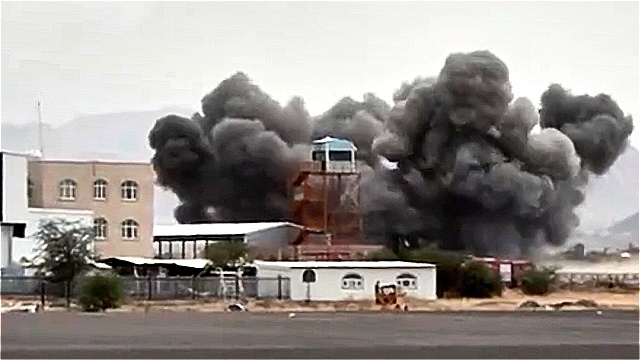
The Yemen war crossed a dangerous new line overnight into Wednesday as Houthi forces
pushed strikes deep into Saudi Arabian airspace, forcing the temporary closure of Abha
International Airport in the kingdom’s south and halting operations at Jeddah for roughly 90
minutes before dawn.
Flights were diverted after what Saudi authorities described as a claimed ballistic-missile hit
near Abha, the busiest hub in the kingdom’s Asir region. In the same window, Houthi units
are reported to have struck a joint Saudi-Pakistani training camp inside Aden International
Airport in southern Yemen, widening the geography of the conflict in a single night.
On the ground, however, the Houthis’ much-publicised “Dawn of Yemen” offensive has
stalled near the coastal town of Dhubab, where government-aligned brigades, backed by
coalition air cover, have slowed the advance along the Bab el-Mandeb corridor. The split
picture — aerial escalation paired with a bogged-down ground push — is reshaping how
analysts read Sanaa’s next move.
For Riyadh, the symbolism is sharp. Abha was the first civilian target the Houthis publicly
struck years ago; its closure again, in the pre-dawn hours of 7 October, telegraphs that the
group retains both the range and the political appetite to hit inside the kingdom whenever the
battlefield tilts against it. Saudi civil aviation diverted inbound traffic to Jizan and Riyadh
while air defences engaged incoming projectiles.
The attack on the camp inside Aden airport is arguably the more consequential development.
It suggests the Houthis have either reactivated sleeper cells inside the southern port city or
extended drone reach across lines that had been considered secure. Pakistani trainers have
quietly been embedded with Saudi-backed Yemeni forces for months; any confirmed
casualties would turn a regional war into a wider diplomatic headache.
Oil markets ticked higher in Asian trading as the news broke, with Brent gaining on fears that
the Red Sea and southern Arabian flight corridors could face renewed insurance surcharges.
Shipping sources said carriers were already re-routing early-morning crews away from
Jeddah while clearance was negotiated.
None of the parties has yet claimed casualties at Abha. The Houthi political office in Sanaa
issued a brief statement framing the strikes as retaliation for coalition raids on Hodeidah
earlier in the week and warned foreign airlines to “review” routings over Saudi airspace until
further notice — a line that in previous rounds has triggered immediate premium hikes from
Lloyds underwriters.
Diplomats in the region tell this outlet the next 24 hours are critical. Oman, which has quietly
brokered previous de-escalations, is said to be pressing both sides to confine the fight to
Yemeni soil. Whether that holds will depend on how Riyadh chooses to respond — and whether the Dhubab stall becomes a rout that pushes the Houthis to escalate further to save
face.
For a region already juggling the Gaza anniversary, fresh Russian salvos over the Black Sea,
and jittery Gulf shipping, the overnight events in Abha and Aden are a reminder that
Yemen’s war has never really been contained — and that each new escalation makes the next
one easier.