
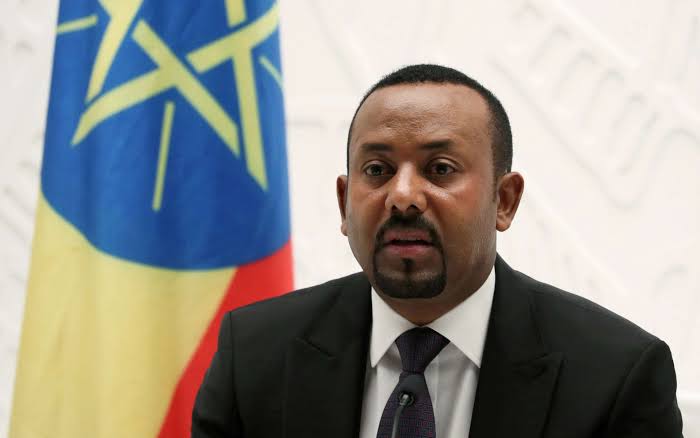
Prime Minister Abiy Ahmed was sworn in for a second five-year term on
Tuesday, pledging renewal and reform in a ceremony that opened the Ethiopian parliament’s new
session — even as fresh clashes in the north and a deepening standoff with Eritrea cast a long
shadow over the capital.
The 50-year-old leader, whose Prosperity Party swept the June elections with 438 of 501
contested seats, took the oath before the House of Peoples’ Representatives in Addis Ababa this
morning. Flags lined the capital’s streets, and foreign delegations from across the Horn of Africa
and the Gulf filled the gallery.
In an address that lasted just over an hour, Abiy pivoted between confidence and caution. He
spoke of a “second decade of transformation” — a continuation of the market reforms and
infrastructure push that have defined his first term — but did not shy away from the costs of the
renewed fighting in Tigray, calling the latest flare-up “a heavy price we are paying for a peace
that must still be built.”
Those words will land uneasily in Mekelle, where civil-society groups report that fighting
between federal forces and Tigrayan factions resumed in late September, two years after the
Pretoria agreement that was supposed to end the war. Aid corridors remain intermittent. UN
officials in the city say some rural districts are entering their fourth week without reliable food
deliveries.
Abroad, the swearing-in comes against a sharpening diplomatic crisis with Eritrea. Asmara has
accused Addis Ababa of massing troops near their shared border, and Abiy’s recent speeches
invoking Ethiopia’s historical “right” to sea access have unsettled regional capitals. Egypt and
Sudan — already at odds with Addis Ababa over the Grand Ethiopian Renaissance Dam — are
watching closely.
On the economic front, Abiy returns to office with mixed credentials. His government has
partially floated the birr, opened the telecoms sector to foreign operators, and launched a
sovereign wealth fund. But inflation remains above 20 percent, foreign reserves are thin, and an
IMF program signed last year is already behind on key reform benchmarks.
His political reach, however, is unquestioned. The Prosperity Party controls almost 90 percent of
parliament. Opposition parties either boycotted the June vote or ran on fractured platforms, and
critics argue that the overwhelming result reflects a shrinking civic space rather than
consolidated popularity. Human-rights groups continue to document arrests of journalists and
opposition figures in Addis Ababa and the regions.
Still, for his supporters inside the Prosperity Party and across the diaspora, Tuesday’s ceremony
was a vindication. One MP from Oromia described the moment as “a second chance to finish
what we started in 2018″ — a reference to the whirlwind opening of Abiy’s first years in power,
when he freed political prisoners, made peace with Eritrea, and won the 2019 Nobel Peace Prize.
That peace has since fractured, and the Nobel medal now sits uneasily on a mantle in a country
where the longest-running conflicts remain unresolved. The next five years, Abiy told
parliament, would require “the hardest work of nation-building we have ever done.” Few in the
room disagreed.