

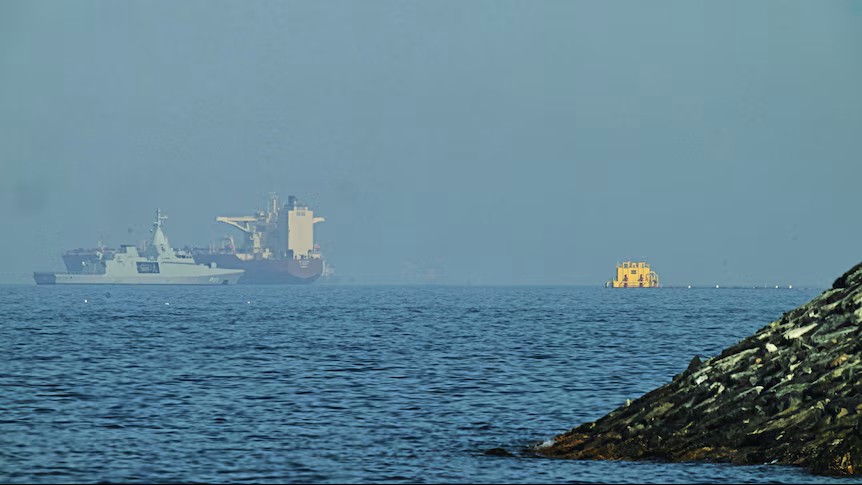
Iran has announced the closure of the Strait of Hormuz to all vessels, marking a dramatic escalation in tensions across the Middle East and raising fresh concerns about global energy supplies and international shipping routes. Iranian military authorities warned that any vessel attempting to transit the strategic waterway could be targeted until further notice.
The Strait of Hormuz is one of the world’s most important maritime chokepoints, connecting the Persian Gulf to international waters. A significant share of global oil and liquefied natural gas exports passes through the narrow passage each day, making any disruption a major concern for energy markets and governments worldwide.
Iran said the decision was taken in response to recent military strikes by the United States and growing hostilities in the region. Statements from Iranian military commands and the Islamic Revolutionary Guard Corps (IRGC) declared that the waterway would remain closed and warned ships against approaching the area.
The announcement immediately rattled global markets, with oil prices surging amid fears of supply disruptions. Analysts warned that a prolonged closure could affect fuel prices, inflation, and global trade, particularly for countries heavily dependent on energy imports from the Gulf region.
However, the situation remains fluid. In recent days, diplomatic efforts between Tehran and Washington have reportedly produced an interim agreement aimed at reopening the strait and reducing military tensions. Reports indicate that both sides are discussing measures that would allow commercial shipping to resume under a broader ceasefire framework.
International shipping companies and maritime authorities continue to monitor developments closely. Several vessels have reportedly altered routes or delayed voyages due to security concerns, while naval forces in the region remain on heightened alert.
Governments across Asia, Europe, and North America have called for restraint and urged all parties to avoid actions that could further destabilize the region. Energy-importing nations are also reviewing contingency plans in case disruptions to oil and gas supplies continue.
As negotiations continue, the future of one of the world’s most strategically important waterways remains uncertain. While hopes for a diplomatic breakthrough have increased, the closure underscores how quickly regional conflicts can have far-reaching consequences for the global economy and international security.