
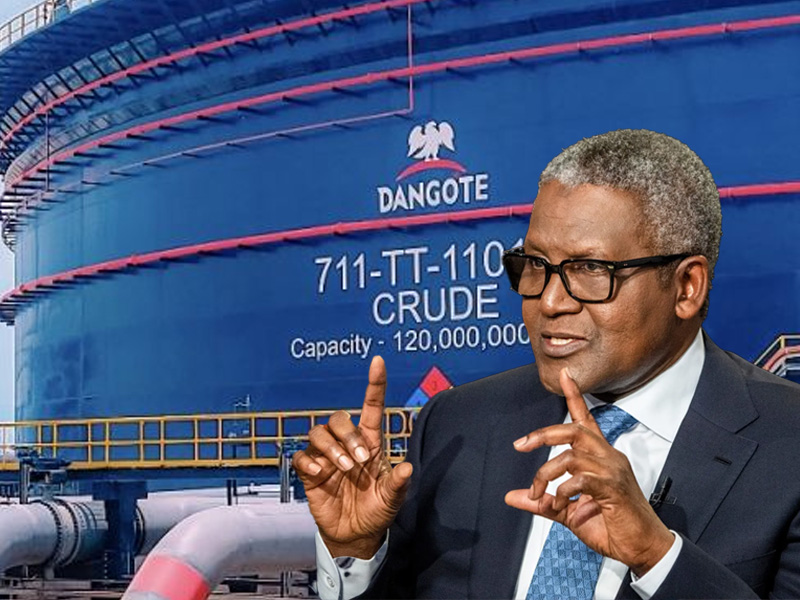
Africa’s richest man says escalating conflict and oil price volatility threaten to upend Nigeria’s fragile economic recovery
Aliko Dangote, Africa’s richest man and the force behind the continent’s largest oil refinery, issued a stark warning on Monday about the ripple effects of the escalating Middle East crisis on Nigeria’s economy. Speaking at a business forum in Lagos, Dangote said the conflict between the US, Israel, and Iran could trigger economic pressures severe enough to force Nigerian companies to revert to work-from-home arrangements as a cost-cutting measure.
The warning carries particular weight coming from Dangote, whose business empire spans cement, sugar, flour, and petroleum refining. His $20 billion Dangote Refinery, which began full operations in 2024, was supposed to reduce Nigeria’s dependence on imported fuel. But the Middle East war has introduced new volatility into global crude oil markets, with threats to close the Strait of Hormuz sending prices on a roller-coaster ride that even domestic refiners cannot fully insulate against.
Nigeria, Africa’s largest oil producer, finds itself in a paradoxical position. While higher crude prices theoretically benefit the country’s export revenue, the reality is more complicated. Refined fuel costs, transport expenses, and the price of imported goods all surge when global energy markets destabilize. For ordinary Nigerians already struggling with the aftermath of fuel subsidy removal and naira devaluation, any further cost increases could be devastating.
The economic anxiety is already being felt on the ground. Oyo State Governor Seyi Makinde approved a N10,000 monthly transport allowance for state workers on Monday to help cushion the effects of recent fuel price hikes. The measure, while modest, reflects the growing pressure on state governments to provide relief as the federal economy absorbs external shocks.
Security concerns are adding to the national unease. At least nine people were killed in separate improvised explosive device blasts in Kwara and Niger states over the weekend, after vehicles detonated explosives planted on local roads. The incidents are a grim reminder that Nigeria continues to battle domestic security threats even as it navigates international economic headwinds.
On the political front, the People’s Democratic Party commenced the sale of nomination forms for upcoming elections, with Reps member Adedeji Olajide declaring his intention to run for Oyo State governor in 2027. Meanwhile, Anambra State Governor Chukwuma Soludo made headlines by appointing 39-year-old Chiamaka Nnake as the state’s first female Secretary to the State Government, a move hailed by women’s rights advocates as a significant milestone in a region where political appointments have been overwhelmingly male.
In the courts, former acting Accountant-General Chukwunyere Nwabuoku was sentenced to 72 years in prison by a Federal High Court for an N868 million fraud. The landmark sentence has been welcomed by anti-corruption campaigners who have long called for harsher penalties for public officials convicted of embezzling state funds.
On the health front, Nigeria’s regulatory agency issued a warning advising pregnant women against using the new long-acting Lenacapavir HIV injection, citing insufficient safety data for this group. The advisory reflects the careful balancing act Nigeria’s health authorities face as they expand access to new treatments while managing potential risks. Dangote’s warning, however, remains the lead story across Nigerian business circles. If the Middle East crisis drags on or escalates further, the economic consequences for Nigeria could extend well beyond inconvenient commutes, potentially reshaping how millions of Nigerians work, spend, and plan for the future