

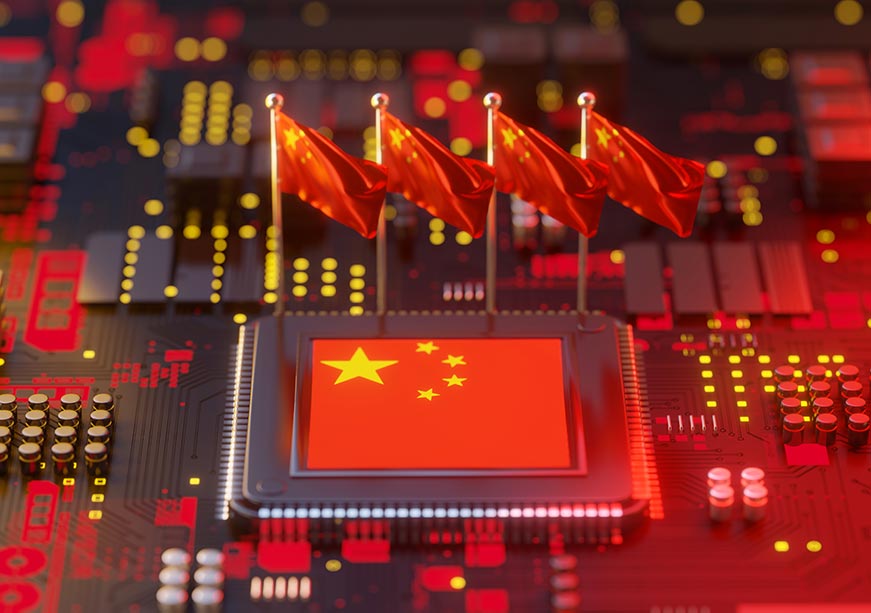
Throughout 2025, stocks of Chinese tech companies listed in Hong Kong skyrocketed, reflecting accelerating AI development and renewed confidence in Chinese technological capacity. However, beneath the headline growth lies a more complex picture of Beijing’s ambitious but uncertain push for technological self-reliance in the face of American restrictions.
The DeepSeek Moment and Chinese AI
The January 2025 release of DeepSeek-R1 triggered significant excitement about Chinese AI capabilities and sent shockwaves through Silicon Valley. The model’s performance suggested that China could compete at the frontier of AI development despite American semiconductor export restrictions and access limitations.
This success has emboldened Chinese tech investors and companies. Chinese chipmakers like Semiconductor Manufacturing International Corporation (SMIC) saw gains of over 200% in October, vastly outperforming American peers. The AI boom has become global, with Chinese investors and companies refusing to be sidelined by American policy restrictions.
Strategic Ambitions vs. Current Constraints
Despite the excitement, Chinese AI investment remains selective rather than all-encompassing for the broader economy. Alibaba recently announced a $52 billion investment in AI over three years—a significant commitment but dwarfed by single OpenAI-led projects planning $500 billion investments over four years. China’s commitment to AI is strategic and focused on specific sectors rather than reflecting a comprehensive technological transformation.
The March 2026 launch of the 15th Five-Year Plan will be crucial. Xi Jinping is expected to accelerate China’s push for technological and industrial self-reliance, directly shielding critical sectors from U.S. technological chokepoints. This suggests Beijing is preparing for continued American pressure regardless of diplomatic outcomes.
Systemic Constraints and Opportunities
Despite achievements, China faces systematic constraints including limits on semiconductor fabrication capacity, talent acquisition challenges, and American restrictions on advanced chipmaking equipment. Chinese companies must innovate around these constraints rather than operating in an open technological marketplace.
Simultaneously, Chinese companies enjoy advantages in certain domains: massive data sets for training AI, large domestic markets for testing applications, and government support for strategic technologies. These strengths position China competitively in specific AI applications even if it lags in cutting-edge semiconductor design.